






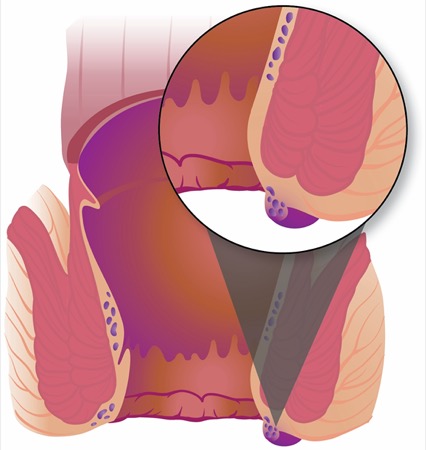
SAN DIEGO—Perianal fistulizing Crohn’s disease is one of the most difficult challenges for gastroenterologists and colorectal surgeons, but a proposed treatment algorithm presented at DDW 2025 may help them manage this difficult CD subtype.
Presenting a comprehensive treatment algorithm for patients with fistulizing CD, Miguel Regueiro, MD, a professor of medicine and the chief of the Digestive Disease Institute at Cleveland Clinic, in Ohio, noted that the first step is answering a simple question: “If someone has a perianal fistula, do they have pain or not?” If someone with a fistula reports pain, this could indicate the presence of an abscess, he explained, in which case the next step is an exam under anesthesia to determine whether an abscess is present and, if one is, to drain it.
“We want to make sure there’s drainage of any abscess as we start a medication,” Dr. Regueiro noted. When the colorectal surgeon drains the abscess, they often will place a seton or setons through the fistula.
After an abscess has been drained, medications for perianal CD fistula usually include a tumor necrosis factor (TNF) inhibitor combined with an immunomodulator, Dr. Regueiro said. “In my practice, I still use infliximab in combination with azathioprine as the first medications for perianal fistula.”
Although infliximab is the “oldest” biologic therapy for CD, Dr. Regueiro said his personal experience and the trial data still support its use for perianal fistula. In patients who are intolerant to TNF agents or have lost response, data support the use of other advanced therapies, such as Janus kinase inhibitors, interleukin-23 inhibitors and anti-integrins.
If someone has a fistula but does not feel pain, the first step often is a pelvic MRI exam or endoscopic ultrasound. This will help determine whether it’s a simple fistula, Dr. Regueiro said, or a more complex fistula with additional interior fistulas and abscesses.
If someone has a simple fistula only, with no pain and no signs of gastrointestinal inflammation, Dr. Regueiro recommended considering a fistulotomy and then monitoring for signs of healing and any complications. But if there is GI inflammation, even without pain related to the fistula, Dr. Regueiro said the best course of action is to start an anti-TNF therapy to treat the luminal CD and fistula.
Advanced therapies also are necessary if the pelvic MRI exam reveals complex fistulas, Dr. Regueiro added.
Clinicians should monitor anyone who has a perianal fistula for signs of symptom improvement. This is usually done with a pelvic MRI after a period of treatment. If there is healing (closure) of the fistula, the medical therapy should be continued. If the fistula is not improving, additional medical therapies, such as those previously mentioned, or surgical options, such as placement of additional setons and a flap procedure or ligation of the intersphincteric fistula tract, may be necessary. Ultimately, if all else fails, the patient may require a diverting ileostomy or colostomy.
“There had been great hope that injecting stem cells into fistulas could close these tracts,” Dr. Regueiro said. Although initial trials were promising, subsequent studies in the United States did not show benefit, with the stem cells no more effective than placebo. As such, it is unlikely that stem cells will be available in the United States anytime soon.
Dr. Regueiro noted that this algorithm “for perianal CD fistula is based on data, where available, but also my own experience over the years,” and is not meant as a formal guideline.
A Huge Burden

Related Content

“Perianal fistulas are a huge burden on quality of life,” said Edward Barnes, MD, MPH, a gastroenterologist and clinical researcher at the University of North Carolina at Chapel Hill School of Medicine. Dr. Barnes said he believes the algorithm that Dr. Regueiro presented effectively details treatment considerations and highlights unanswered questions. For example, although there are options if an anti-TNF agent is ineffective, it is not clear which therapy should be chosen for second-line treatment. “What do we go to next? That’s a big, big question in our field,” Dr. Barnes said, adding that post hoc analyses of agents such as upadacitinib (Rinvoq, AbbVie) show benefit for fistula closure, but the data are not definitive.
Dr. Barnes noted that treating perianal CD is one area in which gastroenterologists and surgeons have not made as much progress as, for example, improving outcomes after surgery for ileocolonic disease. For that reason, efforts like this new treatment algorithm are helpful. Dr. Barnes also pointed to work by the global TopCLASS consortium, which is researching how to standardize and improve care for people with perianal fistulas.
“Every person’s fistula presentation and disease course will be different,” which necessitates dexterity and individualized treatment, Dr. Barnes noted. The DDW algorithm and TopCLASS efforts are helpful, he said, but ultimately, a multidisciplinary care team must treat the case in front of them.
—Marcus A. Banks
Dr. Barnes reported financial relationships with AbbVie, Boomerang, Johnson & Johnson, Lilly, Pfizer, Sanofi, Takeda and Target RWE. Dr. Regueiro reported financial relationships with AbbVie, Alfasigma, Allergan, Amgen, BMS, Celgene, Genentech, Gilead, Janssen, Lilly, Miraca Labs, Pfizer, Prometheus, Salix, Seres, Takeda, Target PharmaSolutions and UCB Pharma.
This article is from the September 2025 print issue.