






University of Kansas
School of Medicine
Kansas City, Kansas
In this edition of Sharma’s Endoscopy Insights, I evaluate the use of augmented reality during endoscopy and the incidence rate and location of polyps in patients undergoing colonoscopy after a positive stool test.
AR in endoscopy appears promising for improving efficiency and preventing endoscopic-related injuries. A headset, such as the one described in the European study below, can help endoscopists maintain a neutral position, reducing the risk for ergonomic injury.
Also, a U.S. study showed there was an increased prevalence of advanced adenomas throughout the colon in patients with a positive fecal immunochemical test (FIT) or multitarget stool DNA (mt-sDNA) test (Cologuard, Exact Sciences). In patients with a positive test, the study also found a higher prevalence of right-sided advanced serrated polyps.
AR to Reduce Ergonomic Strain
Endoscopy 2025;57(S 01):E1050-E1051
Researchers in Europe suggest AR headsets could make endoscopic procedures more ergonomic for those performing them.
They used an example of a patient with esophageal stricture (eosinophilic esophagitis) referred for dilation with the BougieCap technique (Ovesco). The procedure was performed under double fluoroscopic and endoscopic control in a room dedicated to endoscopic retrograde cholangiopancreatography. To see both screens, the endoscopist performing the procedure had to twist significantly away from the patient, potentially straining the neck, back, hips, and knees.
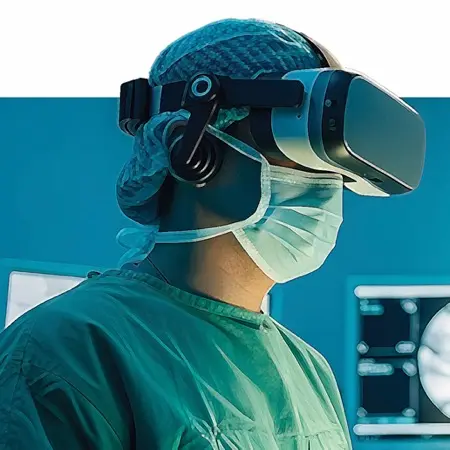
The researchers then had another doctor who was not involved in the therapeutic procedure demonstrate what it would be like to use an AR headset (ClearSurgery) to perform the same actions. The headset made it possible for the operator to place both monitors in his field of view regardless of the room setup, so that instead of twisting, he could face straight ahead, reducing strain on the body.
The AR strategy is still undergoing the approval process.
Polyp Locations in the Setting of a Positive Stool Test
Gastrointest Endosc 2025 Sep 3. doi:10.1016/j.gie.2025.08.043
In this cross-sectional analysis, U.S. researchers looked at the location of colorectal neoplasia in patients with a positive stool test.
Using data from the New Hampshire Colonoscopy Registry from February 2015 to June 2023, the investigators were able to compare the type and location of advanced adenomas, advanced serrated polyps, and advanced lesions overall (adenomatous or serrated, including cancerous polyps) in patients who received either a colonoscopy alone (n=68,645) or a colonoscopy after having a positive FIT (n=584) or mt-sDNA test (n=1,176).
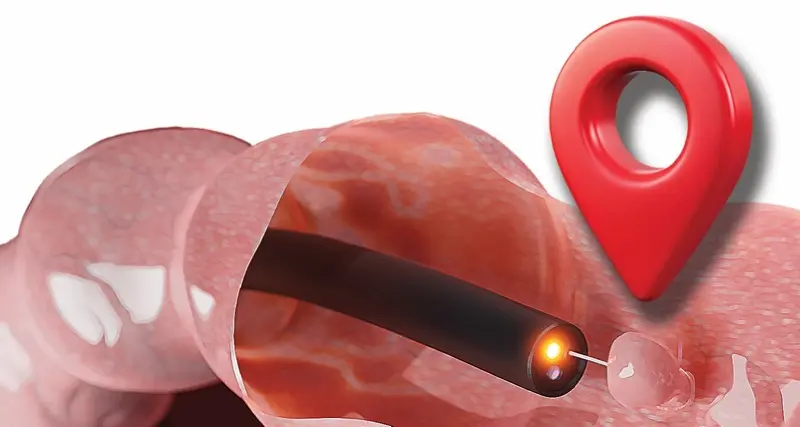
Patients who took either of the stool tests had a higher proportion of advanced lesions and advanced adenomas on both sides of the colon compared with those who only had a colonoscopy (P<0.001).
In addition, patients who took the mt-sDNA test showed an increase in the detection of right-sided advanced serrated polyps compared with colonoscopy alone (odds ratio [OR], 3.21; 95% CI, 2.67-3.85) and FIT with colonoscopy (OR, 1.38; 95% CI, 0.99-1.99).
Study limitations include a lack of racial diversity in the patient population, a larger number of colonoscopy-only patients compared with those who also received a stool test, and a lack of data on the specific type of FIT used.
The investigators concluded that endoscopists can use this information to help inform their practice; for example, they should take particular care when inspecting the right side of the colon in patients with positive stool tests.
Dr. Sharma is a member of the Gastroenterology & Endoscopy News editorial board.


This article is from the December 2025 print issue.