





Results of a new study support the use of liver stiffness measurements to stratify risk in patients with metabolic dysfunction–associated steatotic liver disease.
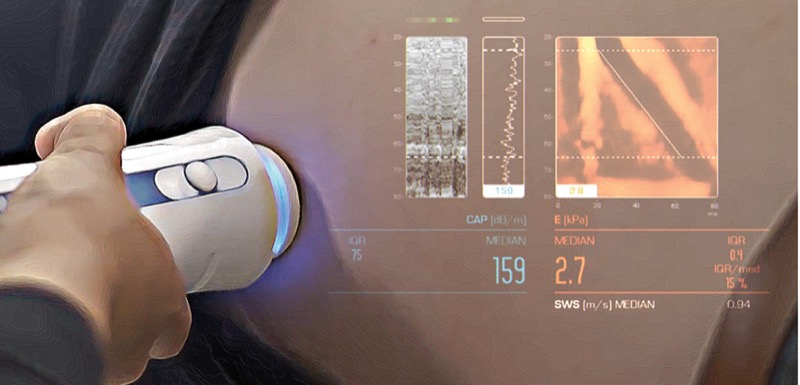
“Liver biopsy remains the gold standard for assessing liver fibrosis, [but] it is an invasive procedure that carries risks and involves high costs related to specialized staff, equipment, and procedural time,” said investigator Antonio Liguori, MD, PhD, a hepatologist at Fondazione Policlinico Universitario Agostino Gemelli IRCCS, in Rome. Measuring liver stiffness through elastography (FibroScan, Echosens) is emerging as a less invasive, cost-effective option, he said. In addition, “it can be easily repeated over time, which is not easily feasible with liver biopsy.”
In the study, presented at the 2025 EASL Congress, Dr. Liguori and his co-investigators followed 389 patients with MASLD who had undergone LSM at least twice spaced at least six months apart between January 2011 and December 2023 (abstract TOP-380-YI). The patients were categorized into three risk groups based on their baseline LSM: low (<10 kPa), intermediate (10-20 kPa), and high (>20 kPa). The researchers then assessed whether baseline liver stiffness and its changes over time could predict the risk of developing adverse liver-related events, such as disease decompensation, liver cancer, and the need for liver transplantation.
Over a median follow-up period of 28 months, 29 patients (7.5%) experienced one of these adverse outcomes. Individuals with liver-related adverse events had a higher baseline LSM consistent with cirrhosis than those who did not (23.3 vs. 6.2 kPa; P<0.01). They also showed worsening liver stiffness over time.
Compared with patients in the low-risk group, those with intermediate stiffness values had nearly a 10-fold higher risk for negative outcomes (hazard ratio [HR], 9.7; 95% CI, 2.05-45.79; P=0.01), while high-risk patients faced a more than 55-fold increased risk (HR, 55.63; 95% CI, 12.15-254.74; P=0.01).
“Our findings showed that not only the baseline liver stiffness value could stratify risk, but also that longitudinal changes added significant prognostic value,” Dr. Liguori said. “Specifically, patients who achieved a reduction in liver stiffness over time—thanks to therapies or lifestyle improvements—were able to reduce their risk of adverse outcomes, even if they initially started at medium or high risk.”
Specifically, patients whose stiffness improved had an adverse event rate of 15.5 per 1,000 person-years, compared with 19.7 in stable patients and 81.4 in those whose LSM worsened.
“This dynamic assessment allows us to monitor how patients respond to dietary, pharmacologic, or surgical interventions, while also identifying those who are progressing and may require more intensive treatments,” Dr. Liguori said.
The study has several important limitations, including its small sample size and having been conducted at a single center, and, thus, the results may not be generalizable, noted Richard Sterling, MD, a hepatologist and professor of medicine at Virginia Commonwealth University, in Richmond.
In addition, Dr. Sterling noted that although the investigators “adjusted for comorbidities that might impact liver-related events,” the EASL abstract did not include demographic information about the cohort. “Furthermore, they do not mention if any of the subjects had undergone liver biopsy to confirm the diagnosis, had any liver-directed therapies, lost weight, or had any alcohol use,” he said.
“However, these data do support the use of LSM both at baseline and to monitor patients with MASLD to help identify those at risk for liver-related events,” Dr. Sterling noted. “Given the ease of noninvasive testing, studies like this one are needed to help clinicians manage patients with MASLD. With new treatments now available for [patients with] MASLD, particularly those with moderate fibrosis (F2-F3), using dynamic noninvasive tests will be increasingly important.”
Although larger cohort studies with fixed intervals are needed, the findings are promising, Dr. Liguori said. “Combined with other evidence,” he added, “they could pave the way for incorporating repeated liver stiffness measurements into international guidelines, both for their prognostic value and as a tool to interpret treatment efficacy over time.”
—Ashley Welch
Drs. Liguori and Sterling reported no relevant financial disclosures.



This article is from the December 2025 print issue.