





Related Content


WASHINGTON—Evidence is emerging for the power of fecal immunochemical testing to not only reduce colorectal cancer incidence but also deaths related to the disease. The latest comes from a study presented of enrollees in two Kaiser Permanente health systems in California for whom completion of FIT within a mailed outreach screening program yielded a mortality benefit across all racial and ethnic groups.
“In this study, completion of one or more FITs in the time prior to the reference date was associated with a 33% lower risk of dying from colorectal cancer. The results are broadly similar to other studies in the past, despite differences in populations and methods. I think this provides fairly strong evidence in support of long-term systemic delivery of FIT across all populations,” said study investigator Chyke A. Doubeni, MD, MPH.
FIT is widely used for CRC screening, but randomized trials are lacking, and most observational studies are not well designed, noted Dr. Doubeni, the Klotz Chair in Cancer Research and an associate director at the Comprehensive Cancer Center at The Ohio State University Wexner Medical Center, in Columbus. Another encouraging study, also from Kaiser Permanente, showed that high uptake of FIT was associated with a 25% reduction in annual CRC incidence and a 52% reduction in CRC mortality (Gastroenterology 2018;155[5]:1383-1391).
“I think it’s important for us to have U.S.-based data on FIT’s effectiveness, including assessments within the community setting that can examine social and structural factors that affect effectiveness,” he said.
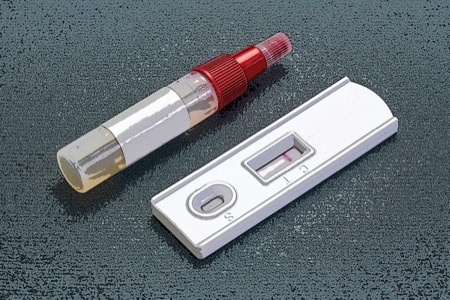
FIT Exposure Versus Nonexposure
Dr. Doubeni led a nested case–control study in a racially, ethnically and socioeconomically diverse cohort of 2,127,128 screening-eligible adults within two large California integrated health systems between 2011 and 2017. The researchers identified 1,279 people aged 52 to 85 years who had died from CRC (cases) and matched them individually 1:8, based on age, sex, duration of health plan enrollment and medical service area, to 10,226 people who were alive and free of CRC (controls). After exclusions, there were 1,103 cases and 9,608 controls. Dr. Doubeni presented the data at DDW 2024 (abstract 477) and they were subsequently published in JAMA Network Open (2024;7[7]:e2423671).
The study looked at completion of at least one mailed FIT in the five years prior to CRC diagnosis. The primary study outcome was CRC death, comparing completion of FIT among cases who developed and died of CRC and controls who did not.
“Essentially, we looked at FIT exposure and nonexposure—whether you got a FIT test or didn’t get one or more in the time period we looked at,” Dr. Doubeni said.
Approximately three-fourths of patients with abnormal results had follow-up colonoscopy, which Dr. Doubeni acknowledged was relatively high. “This is an important point. If you did the study in a setting with a low follow-up rate, you’d find a different set of estimates,” he suggested.
Significant Reduction in CRC Death
Overall, 494 (44.8%) cases and 5,345 (55.6%) controls completed at least one FIT, and approximately 46% completed two or more over 10 years. Completion of FIT was significantly protective against CRC death.
“When we compared cases and controls in terms of the risks of dying of CRC, the estimate was 0.67 [95% CI, 0.59-0.76],” Dr. Doubeni reported.
In regression analyses, completion of FIT screening was more strongly associated with a reduced risk for cancers arising in the left colon/rectum (adjusted odds ratio [aOR], 0.58; 95% CI, 0.48-0.71) than for those in the right colon (aOR, 0.83; 95% CI, 0.69-1.01).
“All racial groups showed fairly good effects of FIT,” he added. The ORs for CRC death were 0.71 (95% CI, 0.60-0.83) in non-Hispanic white people, 0.78 (95% CI, 0.57-1.08) in Hispanic people, 0.58 (95% CI, 0.39-0.85) in non-Hispanic Black or African American people, and 0.37 (95% CI, 0.23-0.59) in non-Hispanic Asian/Pacific Islander people.
Dr. Doubeni acknowledged there are limitations to this observational study, including the possibility of confounding and selection bias, yet its findings are similar to several other respected observational studies and trials of related tests and presumably reliable, he emphasized.
Robert E. Schoen, MD, MPH, the Endowed Chair in Gastroenterology, Hepatology and Nutrition at the University of Pittsburgh Medical Center, noted that for guaiac fecal occult blood tests (FOBTs), randomized trials have shown a reduction in incidence of CRC and related mortality. “Although FIT has supplanted FOBT in practice, its benefit has not been directly proven,” he said. “This rigorously performed case–control observational study provides strong support of FIT’s effectiveness.”
Data from randomized trials comparing outcomes with FIT versus colonoscopy are expected in the near future, Dr. Schoen added, noting that such studies will further characterize the benefit of FIT.
—Caroline Helwick
Dr. Doubeni reported no relevant financial disclosures. Dr. Schoen reported financial relationships with Exact Sciences, Freenome and Immunovia.
This article is from the August 2024 print issue.