





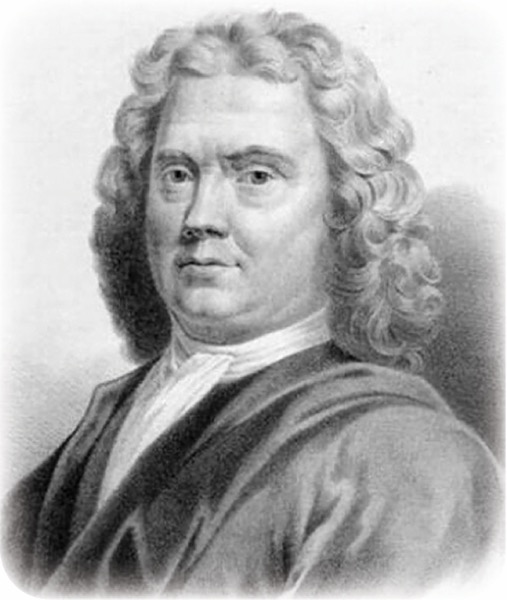
Dr. Herman Boerhaave, a Dutch physician, botanist and chemist, was a pivotal figure in medical history often called the “father of clinical teaching.”
Born on Dec. 31, 1668, near Leiden, Netherlands, Dr. Boerhaave was the son of a Protestant pastor. Initially preparing for the ministry, he turned to philosophy, mathematics and, ultimately, medicine, earning his degree from the University of Leiden in 1693.
Dr. Boerhaave quickly rose through academic ranks at Leiden, becoming a professor of clinical medicine, botany and chemistry, and later assuming the role of rector. Dr. Boerhaave transformed medical education by integrating bedside teaching with clinical practice, attracting students from across Europe. Many of his pupils became leading physicians and helped promulgate his empirical approach. His texts, notably Institutiones Medicae and Aphorismi de Cognoscendis et Curandis Morbis (“Boerhaave’s Aphorisms: Concerning the Knowledge and Cure of Diseases” [translated from the last edition printed in Latin in Leiden, 1728]), remained foundational in European medical schools for decades.
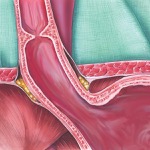
Dr. Boerhaave is best remembered for Boerhaave’s syndrome, a spontaneous esophageal rupture typically affecting the left posterolateral distal esophagus after forceful vomiting. The resulting contamination of the mediastinum or pleural cavity with gastric contents often led to mediastinitis and rapid sepsis—almost universally fatal before modern surgical and antibiotic interventions.
His most famous case involved Baron Jan Gerrit van Wassenaer, Grand Admiral of the Dutch fleet. Dr. Boerhaave’s meticulous documentation of symptoms and autopsy findings, including subcutaneous emphysema and bilateral pleural effusions, exemplified a landmark clinicopathologic correlation.1,2
Today, surgical repair—typically via left-sided thoracotomy and closure of the tear—is the standard treatment. In selected cases, endoscopic stenting offers a less invasive alternative, although it requires coordinated surgical support and chest drainage due to the risk for mediastinal contamination.
Beyond medicine, Dr. Boerhaave directed the Leiden botanical gardens, where some of his contributions remain visible today. In his later years, he suffered from severe gout, untreatable at the time, and died in 1738, at age 69, from complications of a lung abscess.
References
- Boerhaave H. Atrocis, nec descripti prius, morbi historia. Lugduni Batavorum: Boutesteniana; 1724.
- Derbes VJ, Mitchell RE Jr. The history of a grievous disease not previously described. Bulletin of the Medical Library Association. 1955;43(2):217-240.
This article is from the October 2025 print issue.