





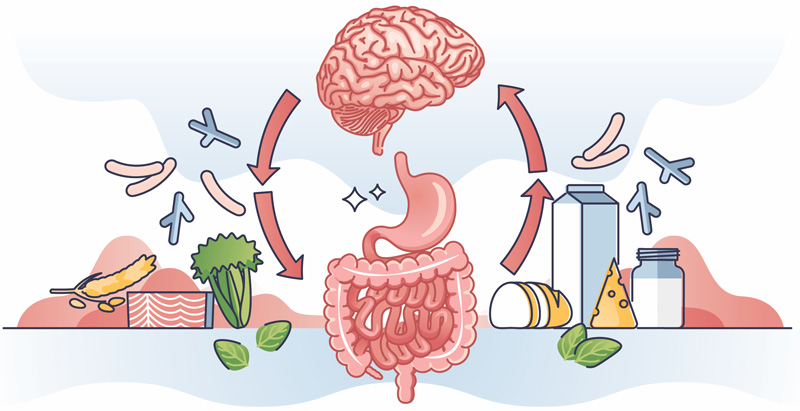
WASHINGTON—As patients increasingly turn to commercially available food sensitivity and microbiome tests in search of answers for their digestive symptoms, gastroenterologists find themselves navigating a landscape fraught with scientific uncertainty and marketing hype. At DDW 2024, experts shed light on the current state of diagnostic tools for disorders of gut–brain interaction, revealing a stark disconnect between their widespread use and the lack of evidence supporting their clinical usefulness.
Related Content


Food Sensitivity Testing: Lack of Scientific Validity
Stephen Vanner, MD, MSc, a professor of medicine at Queen’s University, in Kingston, Ontario, and the director of the gastrointestinal diseases research unit at Kingston Health Sciences Centre, examined the evidence for food sensitivity testing, focusing on two common commercially available options: immunoglobulin G (IgG) antibody and leukocyte activation testing. He cited a randomized controlled trial of 150 patients with irritable bowel syndrome that showed symptom improvement with IgG-guided elimination diets (Gut 2004;53[10]:1459-1464) but noted a crucial limitation: “The foods that were commonly avoided are those that have been shown in previous elimination studies to have benefit [when avoided].” So, he questioned whether it had anything to do with the IgG testing, or was it just that eliminating these foods helped a certain percentage of patients feel better? According to Dr. Vanner, immunology experts consider IgG antibodies to reflect exposure to foods, not sensitivity.
With respect to leukocyte activation testing, Dr. Vanner highlighted issues with reproducibility and lack of a clear biological rationale. Although a study from Yale University showed symptom improvement with leukocyte activation test–guided diets, for example, Dr. Vanner critiqued the study design and the unusual list of foods identified as triggers (BMJ Open Gastroenterol 2017;4[1]:e000164).
“Despite the appeal of these tests to patients, there is a lack of scientific validity behind them, and I don’t think that we should be recommending them to our patients at this time,” he said. “In fact, the results of these tests may be harmful to our patients.”
Microbiome Testing: Premature for Clinical Use
Andrea Shin, MD, MSc, an associate clinical professor of medicine at the University of California, Los Angeles, reviewed the landscape of microbiome testing, acknowledging the explosion of microbiome research and its potential relevance to disorders of gut–brain interaction (DGBI), but she emphasized major challenges in developing clinically useful diagnostics.
“We still have an incomplete understanding of the key or critical microbiome functions, and we have a limited knowledge of biome characteristics across all regions of the GI tract,” Dr. Shin said. Furthermore, there are issues with standardization across studies and a lack of consensus on defining healthy versus unhealthy microbiomes, she added.
Dr. Shin critically examined several commercial microbiome tests, finding limitations in study designs and a need for further evidence demonstrating clinical validity. A systematic review of the GA-map Dysbiosis Test (Genetic Analysis), for example, showed inconsistent results across studies using this test to compare IBS patients with healthy controls (Clin Exp Gastroenterol 2024;17:109-120).
Regarding the GI Effects (Genova Diagnostics) test, which incorporates assessment of 24 commensal microbes with other biomarkers, Dr. Shin said that “although the … assay might correlate with intestinal inflammation, it’s not clear that it provides any additional diagnostic value beyond traditionally established tools used to discern inflammation or if it offers more specific insights into the role of the microbiome in the pathophysiology of DGBIs.”
Dr. Shin also discussed more advanced metagenomic sequencing approaches offered by some companies. Although studies examining these methods suggest accuracy and technical robustness, she emphasized that this does not necessarily yet translate to clinical utility.
“The outlook of microbiome research is highly promising, yet microbiota diagnostics for the treatment of DGBIs remain premature and lack sufficient evidence to support their routine use in guiding clinical care,” Dr. Shin concluded. “We need to apply a systematic approach to study multiple layers within overlapping biological systems and include considerations of contributions from both the host and the resident microbiome.”
Implications for Clinical Practice
Drs. Vanner and Shin both acknowledged the appeal of these tests to patients seeking answers about their symptoms. However, they emphasized the need for clinicians to have thoughtful conversations explaining the current limitations.
“My approach has been to acknowledge why the patient would go in this direction but also to try to explain that these particular tests are not valid,” Dr. Vanner said. “However, we recognize that there is a lot we don’t know and that there are likely important food interactions we will learn about in the not-too-distant future.”
Dr. Shin added that although current commercial tests lack evidence, there’s reason for optimism about future developments. “We don’t necessarily have all the answers right now when it comes to microbiota testing, and we’re on pretty shaky ground,” she said. “We have a lot of challenges to overcome, but collectively, I believe we are asking important questions and eventually, hopefully, we can find a way there, although it might not look the way it does now.”
Dr. Shin reported a financial relationship with Ardelyx. Dr. Vanner reported no relevant financial disclosures.
This article is from the November 2024 print issue.