






The American College of Gastroenterology recently released a clinical guideline on malnutrition and nutritional recommendations in liver disease (Am J Gastroenterol 2025;120[5]:950-972). GEN’s Sarah Tilyou spoke with lead author Ashwani K. Singal, MD, MS, a transplant hepatologist and professor of medicine at the University of Louisville, in Kentucky, about the new guideline and its implications for GI practice.
GEN: What prompted the guideline?
Dr. Singal: Other liver disease guidelines, such as the liver transplant, cirrhosis, and metabolic dysfunction–associated steatohepatitis guidelines, have included small sections on nutrition, but I would like to give full credit to the ACG for recognizing the unmet need for a stand-alone guideline on nutrition in liver disease.
GEN: What’s new in the guideline that clinicians need to know?
Dr. Singal: One new area stressed in the guideline is the importance of not restricting proteins. There is a myth that people who have liver disease or cirrhosis should avoid protein. But that’s not true for several reasons. Cirrhosis is a catabolic state, so patients are losing their muscle mass, and if they cut protein, they are further exaggerating loss of bone mineral density, putting them at risk for fractures. In addition, muscle plays a big role in the elimination of ammonia. There’s a connection between nutritional state, muscle loss, and hepatic encephalopathy, as well as falls and fractures. This cycle can be broken by improving the patient’s nutritional status, by improving how they eat, how much they eat, and their protein intake.
In addition, fatigue is such a common symptom in patients with liver disease, even before cirrhosis. Patients with MASH and primary biliary cholangitis often suffer from fatigue, and I think nutrition plays a big role.
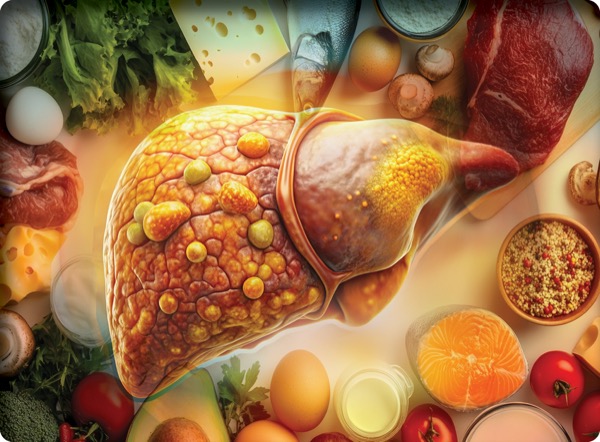
We tell these patients to modify their dietary intake because the metabolic activity of the liver is compromised. For stable outpatients, we recommend frequent smaller meals instead of two to three big meals per day, so that the metabolic activity of the liver continues to supply energy to the rest of the body and fatigue will be reduced. We also recommend a nighttime snack, between 7 and 10 p.m., so there’s continuous fuel supply to the liver to meet the demands of the body while the patient sleeps and they don’t feel fatigued in the morning.
Even if patients don’t have cirrhosis, the idea is to improve their metabolism, so I think the Mediterranean diet is a good choice because it includes easily metabolizable foods. White meat choices generally are much healthier proteins compared with red meat. We also advise patients to incorporate more vegetable sources of protein, such as soy, peas, lentils, beans, chickpeas, and nuts. We also brought out the importance of recognizing that diets high in fructose and refined sugars should be avoided.
Another important point relates to sodium intake. When patients have cirrhosis and fluid retention, such as edema and ascites, our standard recommendation is to limit their sodium intake to 2 g per day. However, there is no large randomized controlled trial to recommend the limit of 2 g of sodium. We know that limiting salt intake can make food less palatable, and these patients often already are losing weight and in a catabolic state. Thus, in the guideline, we said there is no evidence for or against the recommendation of 2 g sodium per day.
In the guideline, we also recommended that patients drink at least two cups of coffee daily.
Another new point is the recognition that patients who are obese can also be sarcopenic. Clinicians should not think that obesity means there is no malnutrition or sarcopenia. They can go together.
GEN: How will the guideline change practice?
Dr. Singal: I think clinicians will take more time to ask patients about their nutritional status: what they eat, how often they eat, how much they eat, etc. They will factor in all these recommendations in the clinic and can counsel patients accordingly.
GEN: What were some of the hottest points of debate among the guideline panel, and how did you resolve them?
Dr. Singal: Other than sodium in the diet, another area that remains unsolved is how to measure sarcopenia. There are parameters for checking muscle strength or muscle function, such as hand grip, the six-minute walking test, and assessment of the ease with which a person gets up from a chair. But there is no good, accurate, clinically simple tool to measure sarcopenia. We also discussed at length the role of vitamin E. We ultimately decided that it may be considered for some patients with MASH, but there are no strong data supporting its use.
GEN: What are the take-home points for gastroenterologists and hepatologists with respect to nutrition for their patients with liver disease?
Dr. Singal: I can divide that into outpatients and inpatients. For outpatients in the clinic, we always include nutrition as a component of their assessment and counseling. We discuss more frequent meals, a nighttime snack, limiting fruit servings, moderate coffee consumption, and for some patients, we recommend vitamin E. There is no strong recommendation, so I base my recommendations on trial data showing benefit in patients with biopsy-proven MASH, who are neither cirrhotic nor diabetic. In that patient group, I’m receptive to vitamin E in patients who are interested in taking it. However, I don’t think it’s appropriate in a diabetic patient or a patient with cirrhosis.
Another point I would like to stress is that sometimes muscle loss can be an indicator of hidden cirrhosis. Patients with cirrhosis can be walking around not knowing they have cirrhosis and may come to the clinic for some other reason, such as hypertension, diabetes, or low platelets. Simply asking them whether they have been losing muscle mass can help uncover potential hidden cirrhosis, and you can further investigate.
On the inpatient side, all hospitalized patients with liver disease should be assessed for malnutrition using the subjective global assessment. In addition, the hand grip and walking tests are important. And finally, evaluation of sarcopenia on the psoas muscle on the CT scan are also important.
Even if they’re eating 100% of their meal trays, I usually advise them to have an extra nutritional drink daily, just to overcome some of the needs of a sick liver. But if patients are only eating 20% or 25% of their meal trays, this clearly means they’re not meeting their goals. Then, we give them three or four nutritional drinks per day.
A randomized controlled trial about a decade ago found no difference in nourished and unnourished patients overall, but if a hospitalized patient was eating less than 21.5 kcal/kg of body weight per day, their outcomes were poor (Gastroenterology 2016;150[4]:903-910). So, patients should get at least 21.5 kcal/kg per day. If a person weighs 60 or 70 kg, that number comes to about 1,200 or 1,400 kcal per day. If I suspect that somebody is not eating that much, then I’ll order a Dobhoff tube to feed that person to improve their outcomes.
Dr. Singal is a member of the Gastroenterology & Endoscopy News editorial board.


This article is from the November 2025 print issue.