





A point-of-care breath test in development can identify people with metabolic dysfunction–associated steatotic liver disease or steatohepatitis with varying degrees of fibrosis as accurately as a biopsy or transient elastography evaluation, according to results from a pilot study.
The test (DiaNose, NaNose Medical) overcomes a labor-intensive step with existing breath assays, the complicated process of measuring volatile organic compounds (VOCs) in exhaled breath as biomarkers of hepatic metabolism. Instead, the new nanotechnology-based sensing device relies on a semi-selective chemiresistor sensor array and machine learning technologies to detect liver fibrosis, the investigators reported at the EASL Congress 2025 (abstract WED-469).
Advanced fibrosis is a predictor of liver-related death, so detecting it at the point of care (POC) is highly beneficial, wrote lead researcher Osnat Sella Tavor, PhD, the chief scientific officer at NaNose Medical, and her co-investigators. Dr. Tavor noted that a breath test can be more cost-effective and easier to perform in clinical settings than a biopsy.
Measuring an Electronic Response
The device’s sensor array detects VOCs caused by altered hepatic metabolism using “functionalized metal nanoparticle films” over electrodes. This design elicits an electronic response—a “breath fingerprint”—that reflects the absence or presence of fibrosis, as well its extent, the investigators noted. The DiaNose includes a single-use breath collection unit, replaceable sensor and measurement system.
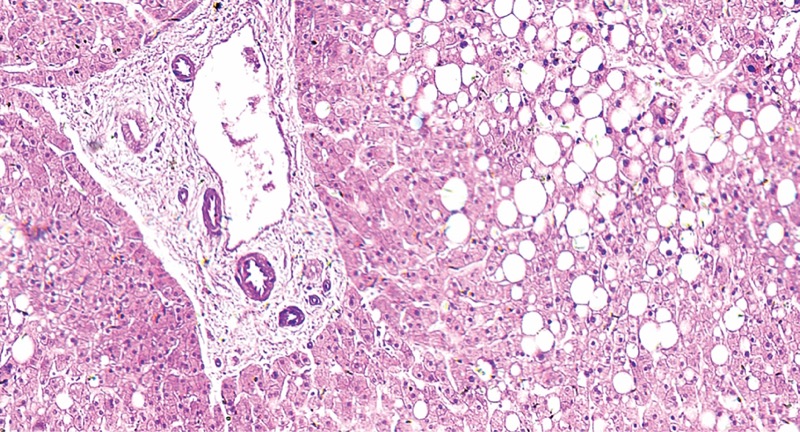
The researchers developed a classification model to detect stage of MASLD or MASH based on sensor signal data collected during clinical studies on 30 MASLD patients, 13 with no or early fibrosis and 17 with advanced fibrosis.
The accuracy of the breath test was compared with biopsies and transient elastograpy (FibroScan, Echosens) measurements. Cross-validation demonstrated 85.5% sensitivity, 79% specificity and 82.3% overall accuracy.
These preliminary results demonstrate the DiaNose test’s potential for noninvasive POC screening to accurately facilitate patient referral, optimize primary care management and support trial stratification to advance treatment development, the researchers noted. They added, “This tool could distinguish MASLD with early versus advanced fibrosis.”
“Several breath test modalities have been studied. This one is unique because there’s no ingestion of specialized food/material and, thus, no lag time before getting a result, and, thus, [it] truly is point of care,” said Shravan Dave, MD, an associate professor of clinical medicine in the Division of Gastroenterology and Hepatology at the University of California, San Diego, who was not affiliated with the research.
“If there is good correlation with the ‘gold-standard’ tests of biopsy and [transient elastography], as endorsed by the abstract, that would be a novel and unique selling point of this breath test,” Dr. Dave added.
Other Breath Test Technologies
In addition to the test measuring VOCs, other breath tests in development for detecting MASLD and MASH include the 13C-methacetin breath test, a POC assay where patients receive 13C-labeled methacetin and the test assesses liver metabolism function based on the rate 13C-methacetin is broken down in the liver into 13CO2 and exhaled in the breath (Gastroenterol Res Pract 2017;2017:7397840).
Another measure is the 13C-methionine breath test, which reflects liver mitochondrial function because a key enzyme in the mitochondria is involved in converting this form of the amino acid methionine into 13CO2, which is then measured in the exhaled breath (Eur J Med Res 2011;16[6]:258-264).
Other researchers have investigated a breath methane/hydrogen assay that measures gases in exhaled breath from patients with small intestinal bacterial overgrowth, which has been linked with MASLD (J Breath Res 2024;18[4]:doi:10.1088/1752-7163/ad5faf; Front Nutr 2024;11:1502151).
It Depends on Dependability
Dr. Dave said breath tests for MASLD and MASH seem clinically viable, “but only if [they] have good fidelity in POC settings and [are] easier and more cost-effective than [transient elastography].” He pointed out that the transient elastography test is already a POC, noninvasive tool for staging MASLD, with good prognostic value, as studies have demonstrated its correlation with cirrhosis and other liver-related outcomes.
Dr. Tavor and her co-investigators indicated they plan to continue collecting data related to use of the VOC-based breath test device to enhance stability and generalization.
—Damian McNamara
Dr. Dave reported that he was a principal investigator for a phase 1 study on a breath test for MASLD unrelated to the DiaNose assay that was conducted at UC San Diego. He added he had no financial stake or benefit from the trial. Dr. Tavor and her co-investigators, with the exception of Rifaat Safadi, MD, are employees of NaNose Medical Ltd.



This article is from the October 2025 print issue.