





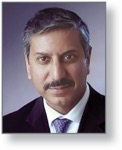
 | Division of Gastroenterology and Hepatology University of Rochester Medical Center Rochester, New York | 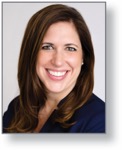 | Division of Gastroenterology and Hepatology University of Rochester Medical Center Rochester, New York |
In recent years, IBD practice and level of complexity have evolved at a frenetic pace, especially with the evolution of biologic and immunosuppressive therapy. In addition, there has been a significant emphasis on health maintenance, quality of life and patient-reported outcomes in this arena. Given these advancements, the care of the IBD patient lends itself naturally to a multidisciplinary, team-based paradigm involving not only the GI physician and APP (advanced practice provider) but also colleagues from colorectal surgery, nutrition, social work, psychology, specialty pharmacy and several other disciplines.
The founding pillar of a well-run IBD specialty clinic is the partnership between the IBD-focused MD and APP. For this two-part series, we spoke with experts from several partnerships that have been successful nationally, in both academic and private practices. In this part, we share insights from IBD-focused GI APPs from different practices representing diverse practices about their clinics and the growing role of such clinics. In part 2, we provide more insight from these APPs and also share the perspectives of two master IBD physicians who discuss their practice models and provide tips for others to emulate. We hope that this conversation and the pearls and caveats shared will help our APP and physician colleagues in their respective practices.
| P A N E L I S T S | |
|---|---|
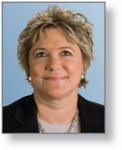 | Assistant Professor Schools of Medicine and Nursing Johns Hopkins University Baltimore |
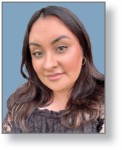 | University of Rochester Medical Center New York |
 | Alaska Digestive & Liver Disease Anchorage |
 | Gastroenterology APP Clinical Supervisor Duly Health and Care Hoffman Estates, Illinois |
Ms. Enslin: Please tell us how you got involved with this specialty clinic and what your current role is.
Dr. Dudley-Brown: I applied for a joint appointment faculty position in 2007 at Johns Hopkins University and became part of the IBD team then. I have my own patient panel of over 1,000 IBD patients, working in clinical practice one day a week.
Ms. Mohammadi: I started my career in GI with a collaborative physician who specializes in IBD (Arthur J. DeCross, MD, AGAF, the director of the IBD Center at the University of Rochester Medical Center). I see IBD patients with varying disease severity as well as some patients with general GI conditions.
Ms. Heagy: There was clearly a need for an “IBD medical home” clinic within out large general GI group, and I was eager to fill the void. We needed to improve continuity of care for our IBD patients and that is where I came in, working as the NP in the IBD subspecialty clinic. Many of the physicians in our practice wanted their complex patients followed more closely and to have easier access to urgent visits to reduce ED visits and hospitalizations, which I can provide.
Ms. Kearns: A lecture at an IBD conference prompted me to think about IBD patient outcomes, and I identified some healthcare gaps in our IBD patients that could be better addressed. This led to a desire to develop a community-based practice process to create individualized treatment plans, focusing on health promotion, provider access and a team-centered approach to close some of these healthcare gaps for our IBD patients. With support and guidance from my physician collaborator, we proposed the IBD PATH—Patient Focus, Access, Teaching/Team Approach and Healthy Outcomes—program in 2019. To date, it has been an amazing experience as an APP to take part in developing each part of this specialty clinic.
Ms. Enslin: Please describe the structure of the IBD specialty clinic in your practice.
Dr. Dudley-Brown: Our IBD team includes seven providers: six physicians and myself. Each provider sees patients one half-day to two days per week. We are very lucky to have four RNs on our team: one is the biologic coordinator, and the other three handle patient inquiries, results, etc. Unfortunately, the RNs are not in clinic with us. Each provider also has a medical office coordinator, who assists with patient calls and clinic scheduling. I see about 14 patients in a full clinic day—one new patient, the rest follow-up visits. One day per month is dedicated to telemedicine visits only.
Ms. Mohammadi: We typically see 12 to 14 patients in a full-day clinic session. Medical technicians check patients’ vital signs, and clinic nurses assist with vaccinations and blood draws. We are very lucky to have an IBD care coordinator and a specialty pharmacist who are available during clinic as well. We do a “team huddle” before every clinic and review each patient’s relevant history and current disease status.
Ms. Heagy: Our clinic has four RNs that rotate through our infusion center and triage, as well as medical assistants who also help with triage, rooming patients and various clinic needs. The infusion nurses have great relationships with the IBD patients and assist if a patient requires an urgent appointment with a provider. They also help with biologic/immunomodulator refills and prior authorizations. I work four days a week and see 12 to 14 patients a day. I have two slots a day saved for IBD urgent visits. If they are not filled 48 hours ahead of time, they are filled with any urgent (non-IBD) patients.
Ms. Kearns: I work with a multispecialty, physician-directed medical group in the Midwest. In the Division of Gastroenterology, we have 30 physicians and six APPs. Each day, IBD Access slots are built into my schedule. The IBD Access time slot can be used in many capacities, including newly diagnosed IBD patients, symptomatic IBD patients, yearly health maintenance and hospital follow-up appointments. We use a team approach. I have a dedicated nurse who is also the navigator for IBD advanced therapies.
Ms. Enslin: IBD is truly a team sport. What interdisciplinary or multidisciplinary collaborations have you established?
Dr. Dudley-Brown: We have weekly case conferences which include team members from gastroenterology, surgery and radiology. While the purpose of these weekly case conferences is to educate the house staff who present inpatients with IBD, we have the opportunity to discuss our own outpatient cases as well. Occasionally, we invite one of our dedicated GI pathologists to the case conference as well. We also have a weekly research/science meeting where other faculty who are conducting clinical research on topics related to IBD present. These meetings are also an opportunity for outside presentations, such as invited medical science liaisons (MSLs) from pharmaceutical companies and so forth. These are all via teleconference, which facilitates attendance.
Ms. Mohammadi: In our IBD clinic, we have both a care coordinator and a specialty pharmacist who work closely with our patients, ensuring our prior authorizations are up-to-date, helping patients receive medication without significant financial burden, etc. We also work closely with colorectal surgery and ostomy nurse colleagues.
Ms. Heagy: We have a nutritionist on staff who rotates between our three main clinic sites. We have access to mental health and pharmacy experts as well, but they are not on staff. We also have a research coordinator for our research patients.
Ms. Kearns: I realized that the clinical aspects of the IBD PATH was only one part of this project. We collaborated with the EMR [electronic medical record] team in the development of templates and diagnostic panels, and they even provided unique tips on how to possibly build a recognizable banner for all IBD PATH patients. We also have a strong collaborative relationship with our surgeons.
Ms. Enslin: In your practice, what is the role of physician collaborators?
Dr. Dudley-Brown: Luckily, I practice in Maryland, where NPs have full scope-of-practice authority. I practice independently but do feel part of the IBD team and ask questions individually and to the group on relevant patient issues. Outside of IBD, all of the other NPs in the GI Division have both shared clinics with physicians, as well as some independent clinics, which is a more traditional model in GI.
Ms. Mohammadi: In our clinic, the APPs and fellows work collaboratively with our physicians in a shared clinic model. I also have my own independent panel of patients consisting of both IBD patients and general GI referrals.
Ms. Heagy: I practice independently with consultation/guidance from physicians as needed. Our physicians are available for any questions that may come up, and they perform endoscopic procedures on all the patients I see in clinic. We have weekly IBD huddles to discuss high-risk or complex patients.
Ms. Kearns: I have a very autonomous role within our practice. I have an independent clinic and when needed, I reach out to my collaborating physicians for guidance. When it comes to IBD PATH patients, through our team approach, the physicians and I will usually communicate with each other after patient visits or if there is an update on clinical status.
Ms. Enslin: Is there any clinical research that is generated from your clinic or clinical trials that source patients from this clinic? What is your involvement with research?
Dr. Dudley-Brown: At my tertiary care institution and teaching hospital, there is quite a bit of research going on at any one time. I do a lot of recruiting, for pharma-based clinical trials and investigator-initiated studies. I am preparing to be site principal investigator for a multicenter National Institutes of Health–funded study, which is exciting!
Ms. Mohammadi: There are several ongoing clinical research trials that patients can join if they meet inclusion criteria. I am always happy to refer patients to my colleagues who run our research trials.
Ms. Heagy: I assist with recruitment into our research trials. However, once the patient is enrolled, I do not see them in follow-up; the research team takes over their care.
Ms. Enslin: Are there community outreach activities that this clinic is involved in, has generated or collaborates with?
Dr. Dudley-Brown: We all have been champions with the Crohn’s & Colitis Foundation at one time or another. In the past, I did a lot of work with our local CCF chapter in patient education programs, but they have moved away from that since the COVID pandemic to more online patient education programs.
Ms. Mohammadi: We hosted our first-ever IBD education day this year in collaboration with CCF! We developed a curriculum that presented medical conditions and terms in easy- to-understand, plain language. We ended up having a lot of discussion and questions from the audience, which was mostly patients and caregivers.
Ms. Heagy: We are part of CCF. I do quarterly patient education programs and attend the local CCF annual nurses meeting. Many people on our team also attend CCF walks and fundraisers.
Ms. Enslin: What is your vision for the future of this clinic at your center and within your healthcare network?
Dr. Dudley-Brown: This clinic will be around for a long time. There is no shortage of IBD patients, both in the state and surrounding states, and also for consults from people with IBD around the globe. I hope to have another APP join the IBD group at some point. We have two outpatient locations currently, but the Johns Hopkins Health System is ever-expanding, so there will be more in the future.
Ms. Mohammadi: Our goal is to develop a fully immersed IBD center that would include the ability for patients to complete blood work/stool studies, receive IV fluids and medication if necessary, and receive urgent care to keep them out of the hospital during flares. It would also include nutrition, mental health and social work services.
Ms. Heagy: Our goal is to continue to grow the subspecialty IBD clinic. We are collecting data to show that we are taking better care of our patients, using metrics such as fewer emergency department visits, less steroid and narcotic use, fewer surgeries and fewer hospitalizations. Having positive outcomes data can be helpful when negotiating with payors to improve reimbursement, which ultimately allows us to add staff and enhance resources.
Ms. Kearns: I envision growth. Over the next year, I would like to focus on multidisciplinary collaboration. I am hoping to inspire some of the APPs within the GI team to join this initiative and implement the IBD PATH program in their regions as well. I would also like to begin tracking outcomes data from the IBD PATH program and hopefully leverage these data as an incentive to develop other APP-driven programs within the healthcare organization.
Ms. Enslin: There are several new biologic therapies and biosimilars. What advice do you have/what resources do you suggest for APPs to stay current with treatment regimens and best practices?
Dr. Dudley-Brown: As there are more therapies for IBD, the management of IBD becomes more complex. My advice for APPs is to meet with MSLs from pharma companies for information, whether a formal or informal presentation, and to review the recent trials, including data, side effects, etc. Of course, I recommend that all APPs attend a Gastroenterology Hepatology Advanced Practice Provider (GHAPP) meeting, either the annual course or a regional meeting. In addition to GHAPP, the annual meetings from the national GI societies—American College of Gastroenterology (ACG), American Gastroenterological Association (AGA), and American Society for Gastrointestinal Endoscopy (ASGE)—are good resources and have specific resources/meetings for APPs, which was not the case 10 years ago.
Ms. Mohammadi: There are lots of ways to stay current with new advances in IBD. I like to read different journals, including Inflammatory Bowel Disease, Journal of Crohn’s and Colitis and the American Journal of Gastroenterology. There are websites (such as the one CCF has) that do a good job of keeping up with new treatment options. I also recommend attending IBD-specific conferences where you can learn from IBD thought leaders.
Ms. Heagy: I recommend picking at least one big meeting a year to attend, such as CCF, GHAPP, Digestive Disease Week or ACG. If the big meetings are out of reach, consider smaller one-day meetings, virtual meetings or regional meetings. IBD-focused meetings, such as CCF, Advances in IBD, Cornerstone, GUILD and IBD Horizons, are very helpful.
Ms. Kearns: You must challenge yourself to continue to learn. I recommend membership and involvement in GI organizations, such as ASGE, AGA, ACG, GHAPP and CCF. Each of these organizations has several IBD learning outlets (online modules/webinars) for APPs, no matter what level of experience you may have. I highly suggest that APPs attend continuing education-accredited meetings, to build on your educational platform and to collaborate with peers. I also recommend developing strong relationships with your local MSLs.

This article is from the October 2023 print issue.