





The population prevalence and burden of disorders of gut–brain interaction have increased substantially following the COVID-19 pandemic, according to a recent study.
The findings, experts said, underscore the pandemic’s lasting effect on gastrointestinal health and highlight challenges for clinicians managing post-COVID patients.
The investigators surveyed more than 8,000 adults across the United States and the United Kingdom using identical methodology during 2017 (n=4,050) and 2023 (n=4,002) (Clin Gastroenterol Hepatol 2025 Jul 30. doi:10.1016/j.cgh.2025.07.012). Respondents completed the Rome IV diagnostic questionnaire, as well as assessments of mood, somatic symptoms, and healthcare use. The 2023 survey also captured data about COVID-19 infection history.
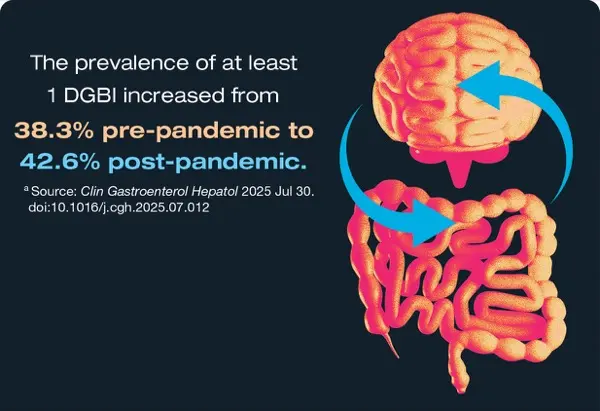
Experts found the prevalence of at least one disorder of gut-brain interaction (DGBI) increased from 38.3% pre-pandemic to 42.6% post-pandemic (odds ratio [OR], 1.20; 95% CI, 1.09-1.31). Of note, functional dyspepsia rose from 8.3% to 11.9% (OR, 1.48), while irritable bowel syndrome increased from 4.7% to 6.0% (OR, 1.31). The burden of these conditions also appeared to be greater during the postpandemic era, with higher rates of anxiety, depression, somatic symptoms, reduced quality of life, and healthcare use among patients with DGBI, particularly among people with long COVID.

“This study reveals that COVID-19 has significantly increased functional gut disorders in the general population,” said Imran Aziz, MBChB, MRCP, MD, a senior lecturer and honorary consultant at the University of Sheffield, in England, and one of the investigators. “We also showed that post-COVID gut disorders are more severe and require more medical care than similar prepandemic conditions. Healthcare providers should now recognize these disorders as part of the long COVID spectrum.”
Dr. Aziz noted that COVID-19 likely follows a well-documented pattern of postinfectious GI complications.
“The virus directly attacks gut cells and triggers inflammation that disrupts gut–brain communication,” he explained. “Approximately 1 in 10 people develop chronic postinfectious IBS following any acute gastroenteritis. COVID can now be added to the list of infections causing postinfectious IBS.”
Outside experts in the field praised the study’s rigor but cautioned against overinterpretation.
“The study, while not without limitations, is well conducted with large sample sizes in multiple countries and provides compelling evidence of a rise in DGBI,” said Alex Zhornitskiy, MD, an assistant professor of medicine at University of California, Davis. “Although the findings indicate that COVID infections and long COVID contribute to this increase, it is important to interpret the manuscript’s results cautiously and avoid attributing the entire rise in DGBI solely to COVID infections or complications.”
Christopher V. Almario, MD, an associate professor of medicine in the Karsh Division of Gastroenterology and Hepatology at Cedars-Sinai, in Los Angeles, highlighted the study’s findings on quality of life.
“This study further reinforces the pandemic’s significant impact on gut health,” Dr. Almario said. “Using a population-based survey, the authors found that DGBI—already common pre-pandemic—became even more prevalent during the pandemic. Interestingly, they also found that people with DGBI during the pandemic reported worse quality of life than those with pre-pandemic DGBI.”
Dr. Almario also stressed the need for ongoing monitoring.
“The big question is whether the pandemic-era increase in DGBI seen in this study as well as others will persist or return to baseline now that the pandemic is over. We need further studies to track trends,” he said. “Studies to better understand why quality of life now appears worse among people with DGBI will also be important. Potential drivers include higher symptom burden—both physical and mental—along with care disruptions and limited access to GI specialists.”
For now, Dr. Aziz advised clinicians to manage post-COVID functional GI disorders using existing evidence-based approaches.
“Doctors should follow the standard guidelines for functional dyspepsia and IBS, since these are our best options until we can do more research specifically focused on COVID-related gut problems,” he said.
—Ethan Covey
Dr. Almario reported financial relationships with GreenSpace Labs, My Total Health, Owlstone Medical, and Salix. Dr. Aziz reported a financial relationship with PrecisionBiotics.



This article is from the December 2025 print issue.