





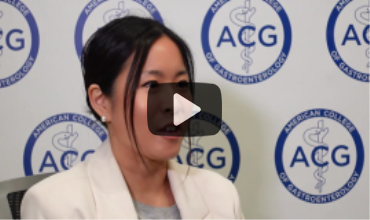
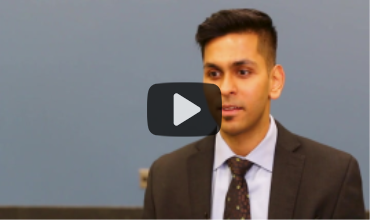
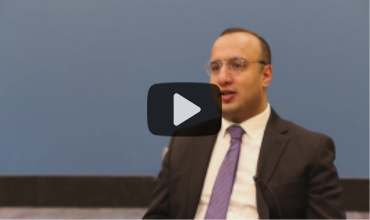
The gastroenterology fellowship experience can have its ups and downs. It can be hard to juggle all the requirements of fellowship along with whatever else life throws at you. For this installment of Fellows Corner, GEN’s Sarah Tilyou sat down with three fellows to discuss some of their fellowship experiences. Two are from Stanford Hospital: Ofer Fass, MD, who’s interested in an academic career and is considering a subspecialization in esophageal disorders, and Nakia Chung, MD, whose post–medical school journey took her into an orthopedic residency before she realized that GI and hepatology were a better fit for her. Enad Dawod, MD, from Weill Cornell, developed a keen interest in the GI field as a teenager observing a compassionate gastroenterologist treat his mother.
Palo Alto, California
New York, New York
Palo Alto, California
Below is an excerpt of their conversations.
GEN: What are some of your biggest challenges as a fellow?
Dr. Fass: There’s always the challenge of trying to balance all your different responsibilities and goals—I want to work on my research, I’m doing my master’s coursework [for an MPH program], I’m trying to publish, and I’m also trying to be a good gastroenterologist. You have to find time to do endoscopy and colonoscopy and see patients. So, there are a lot of different things you’re juggling. And it’s challenging, but at the same time, it’s very rewarding. And it’s fun to be in a place in your training when you have more time. At least in our program, as a second-year fellow, you have a lot more unstructured time to focus on what’s interesting to you.
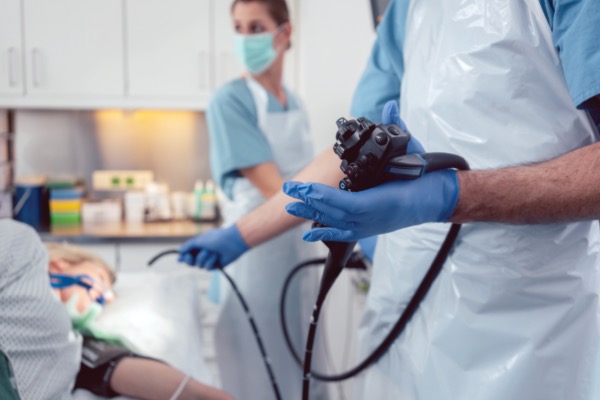
Dr. Dawod: I feel the biggest challenge is that we live in a time when we all are trying to do a lot of things at the same time. We owe it to our patients to give them our best time and best effort, and our complete dedication. So, that’s always the priority. But on top of that, we need to try to have a good academic progression within fellowship. It’s challenging but completely doable. It’s juggling between the clinical responsibilities, giving your best to patients, and being involved in other extracurricular academic activities.
For me, the first year of fellowship was really heavily clinical. We were on consults most of the time, doing scopes, really trying to become the best endoscopist and gastroenterologist we could be. And that’s still an ongoing process—that hasn’t stopped. But as a second year, I think in our fellowship, we’re very sort of privileged that we have dedicated time for research. So, I focus more on research activities—I run an obesity board and the multidisciplinary pancreas tumor board as well. And I have had time to start my own research team with residents, fellows and medical students. The challenge is trying to do all of that at once. But if you’re doing it because you really want to do it, you’ll always find a way to make things happen.
Dr. Chung: The biggest challenge is probably just being married and having three young children, trying to be present in my children’s lives while still trying to be the best fellow I can be—because, you know, obviously, it’s hard to do both. And in any given moment, it feels like I’m not probably giving either side as much as I should. But I do have great co-fellows. And they’ve made it a lot easier.
Check out the full interviews @ GastroEndoNews.com/Multimedia
Editor’s note: Drs. Fass, Dawod and Chung were interviewed during their second year of fellowship. They are currently completing their third fellowship year.
This article is from the April 2024 print issue.