





Related Content
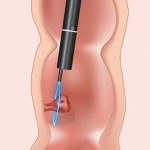

When removing nonpedunculated polyps smaller than 10 mm, what technique is best: cold snare polypectomy or cold endoscopic mucosal resection?
Experts who spoke to Gastroenterology & Endoscopy News, and recent reports in the literature, agree that there are only small nuances that come into play when selecting between the two cold techniques. Endoscopists can compare the rates of complications, resection and recurrence associated with each technique. But new data show that procedure time may be another differentiator.
Complication Rates
Cold snare polypectomy (CSP) is known for its low complication rates. The push away from hot snare or electrocautery to CSP was to reduce complications like “postpolypectomy syndrome,” bleeding after polypectomy and perforation, according to Vivek Kaul, MD, the Segal-Watson Professor of Medicine in the Gastroenterology and Hepatology Division at the University of Rochester Medical Center, in New York. “So, in general, cold snare resection is considered safer because you’re not applying thermal energy to the colon wall, and, therefore, the risk for perforation and risk for postpolypectomy syndrome is low,” Dr. Kaul said.
“Cold snare is great in that it is essentially devoid of post-procedure complications, so any kind of risk of delayed bleeding is almost unheard of. Any risk of perforation is almost unheard of,” John Guardiola, MD, an assistant professor of clinical medicine at Indiana University, in Indianapolis, told Gastroenterology & Endoscopy News. “Doing cold resection where you would eliminate the risk of bleeding and perforation is very attractive.”
Concerns About Incomplete Resection and Recurrence
Traditional cautery-based (hot) snare polypectomy offers the advantage of thermal ablation of any residual adenoma around the polypectomy margin, Dr. Kaul explained. “Since thermal ablation is absent with CSP, one of the concerns is incomplete adenoma resection—specifically around the polyp margins—and potentially, increased rates of residual or recurrent adenoma at the site, especially if the proper technique for CSP is not used,” he said. Some studies have found a higher rate of recurrence with cold techniques (Gastrointest Endosc 2024;99[3]:326-336).
Whether this issue is mitigated by using a cold EMR technique is unclear since most of the literature has looked at traditional hot snare polypectomy versus CSP, not C-EMR.
The argument to use C-EMR would be the ability to better delineate the polyp margins and extent, especially with subtle lesions and serrated adenomas. “However, utilizing the correct technique for CSP—that is, including a rim of normal mucosa as part of the resection and/or using C-EMR for more flat/subtle lesions—may ensure a more complete polyp resection and, hence, obviate some of these concerns raised around CSP,” Dr. Kaul said.
The clinical impact of recurrence also is unclear, according to Dr. Guardiola. “That’s an unanswered question: Does [the high recurrence rate] matter? Is recurrence something that we can’t manage? So far, the two largest studies [Gastroenterology 2021;160(3):949-951; Gut 2023;72(10):1875-1886] show that almost all recurrences can be easily managed,” he said.
Procedure Time and Money
Two recent meta-analyses of seven randomized controlled trials comparing CSP and C-EMR found that the only noticeable difference between the two techniques was procedure time (Endoscopy 2024;56[7]:503-511; Clin Endosc 2024 Jun 5. doi:10.5946/ce.2024.081).
The analyses found no significant differences between the two cold techniques with respect to complete resection, en bloc resection and adverse events (immediate bleeding, delayed bleeding and perforation). The only difference noted was that C-EMR had a significantly longer procedure time, by about 42 seconds.
Vishali Moond, MD, an internal medicine resident at Saint Peter’s University Hospital/Robert Wood Johnson Medical School, in New Brunswick, N.J., and the lead investigator of the paper published in Clinical Endoscopy, said she was somewhat surprised by the findings. The rates of resection and adverse events were more similar than she had hypothesized, she told Gastroenterology & Endoscopy News. “However, the significantly longer resection time associated with C-EMR was an expected outcome, given the additional steps involved,” she said.
Being judicious with time can help save seconds for where it is needed most—for a more complicated patient, perhaps. However, EMR’s CPT (Current Procedural Terminology) code has a higher return, so that is another aspect to consider, if appropriate, when deciding on a method, Dr. Kaul said.
CSP Is Adequate in Most Cases
If much is the same with adverse events and resection rates, then it might be a smart choice to choose CSP, Dr. Moond said. “Given that CSP and cold EMR have similar efficacy and safety profiles for small polyps, gastroenterologists would be more inclined to use CSP due to its shorter resection time and comparable outcomes. This approach helps streamline procedures and reduces patient time in the endoscopy suite without compromising safety or efficacy.”
Drs. Kaul and Guardiola agreed. “For most polyps 10 mm or smaller, cold snare polypectomy is adequate,” Dr. Kaul said.
Cold forceps polypectomy is also a possibility, added Dr. Guardiola, who also wrote an editorial accompanying the meta-analysis in Endoscopy (2024;56[7]:512-513). “But you could make the argument that that’s not useful from an environmental and cost standpoint, that it would be better just to use the one instrument,” he said.
The new research “proves that where our guidelines stand [is correct],” Dr. Guardiola said, noting that “the Europeans just published new guidelines [Endoscopy 2024;56(7):516-545], [recommending] that all polyps less than 10 mm in size, whether or not they’re pedunculated or sessile, can be removed with a cold snare without EMR.”
However, not everyone may know about the new guidelines. Education on CSP is needed, Dr. Kaul said. “More teaching and raising awareness around the benefits of cold snare polypectomy would be welcome,” he said. “I think that this is a technique that even non-GI providers doing colonoscopy might find easier to adopt when performing polypectomy early on in their career.
“There is a fair amount of colonoscopy being done in low-resource environments by non-GI practitioners. These options could be simpler, safer, easier and cheaper techniques for polypectomy for [practitioners in] those communities [who] don’t have advanced polypectomy skill sets.”
—Meaghan Lee Callaghan and Jim Kling
Dr. Guardiola reported financial relationships with Boston Scientific and Olympus. Drs. Kaul and Moond reported no relevant financial disclosures. Dr. Kaul is a member of the Gastroenterology & Endoscopy News editorial board.
This article is from the August 2024 print issue.