





PHILADELPHIA—New research with a decade’s worth of data indicates that endoscopic sleeve gastroplasty yields long-term weight loss without adjuvant weight-loss medications.
Previous evidence from the level I MERIT trial comparing lifestyle modification with ESG showed that the procedure led to total body weight loss (TBWL) of around 14% at 52 weeks (Lancet 2022;400[(10350]):441-451), which led to the FDA approval of ESG for the treatment of obesity for individuals with a BMI between 30 and 50 k/m2.
In the new study, investigators sought to determine if ESG induced long-term weight loss 10 years post-procedure without the use of anti-obesity medications, said investigator Ali Lahooti, an MS-4 at Weill Cornell Medical Center, in New York City, who presented the data at ACG 2024 (oral abstract 48).
Dr. Lahooti, along with primary investigator Reem Z. Sharaiha, MD, an associate professor of medicine at Weill Cornell, and their co-investigators analyzed prospective data from 404 consecutive patients undergoing ESG at their large tertiary care hospital between August 2013 and May 2024.
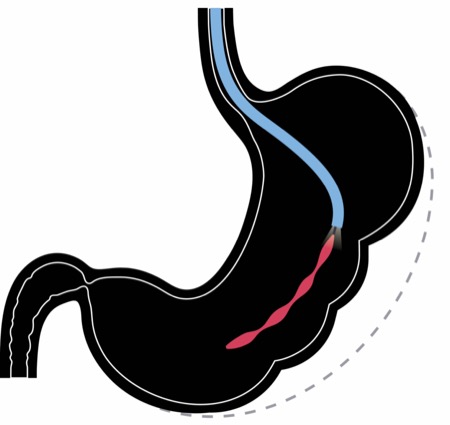
The patients had a baseline visit and follow-ups at one, three, six and 12 months, and at least annually thereafter. The average age was 45 years and average baseline BMI was 37.3 kg/m2; about 30% of patients had diabetes or pre-diabetes, and close to 60% had hypertension. Also, about one-third of the female and half of the male participants had elevated alanine transaminase levels.
As part of a multidisciplinary program at Weill Cornell, patients were offered anti-obesity medications if they failed to achieve at least 5% TBWL three months after ESG or regained weight after ESG, Dr. Lahooti said. Those with contraindications or inadequate response to pharmacotherapy also were offered repeat ESG, and surgery was offered to patients with insufficient weight loss who qualified for surgical management. However, the study analysis excluded patients who underwent additional anti-obesity treatment beyond the initial ESG.
Ultimately, 110 patients were eligible for the study. At 10 years, those with ESG alone had a mean TBWL of 10.5%. “Among these patients, about 53% maintained a TBWL of 5% and 42% maintained 10% TBWL,” Dr. Lahooti said.
(A real-world analysis of the excluded patients who took anti-obesity medication or had ESG revision showed a mean TBWL of 15.8% [95% CI, 12.2%-19.5%; P<0.001], and 83% and 70% of patients maintained 5% and 10% TBWL, respectively.)
About 20% of patients had mild adverse events, most commonly nausea, heartburn, constipation and/or abdominal pain that resolved shortly post-procedure. “None of these patients required inpatient or overnight treatment, and most adverse events resolved within two weeks of the procedure,” Dr. Lahooti said.
There were three moderate adverse events: two perigastric leaks, one repaired endoscopically, and one that required only antibiotics; and one patient had prolonged upper quadrant pain that resolved after suture removal and stomach expansion, “which aligned with dietary indiscretion having a role in their pain,” Dr. Lahooti said.
“This research further confirms the safety and durability of ESG and suggests it should be considered, particularly among individuals who do not attain their desired results through lifestyle modifications and those who were not eligible or who choose not to undergo bariatric procedures,” he added.
‘Durable Option’
Octavia Pickett-Blakely, MD, the director of the GI Nutrition, Celiac Disease and Obesity Program at the University of Pennsylvania Perelman School of Medicine, in Philadelphia, said the study helps confirm ESG is a durable option for weight loss.
“We’ve seen similar findings from studies with up to five years’ follow-up, but this is 10 years of data. As with weight-loss surgery, there is a possibility of some weight regain, but in this study, 70% of patients [including patients who had taken weight-loss medications or undergone revision] maintained 10% TBWL, which is really encouraging,” Dr. Pickett-Blakely said.
Related Content

Dr. Pickett-Blakely explained to Gastroenterology & Endoscopy News that all effective tools, including endoscopic bariatric procedures, need to be leveraged to optimize health outcomes for patients with the chronic condition of obesity.
“It’s not uncommon for a patient who experiences suboptimal weight loss or weight regain with lifestyle modifications to be offered a surgical bariatric procedure or anti-obesity medications,” she said. “I think ESG should be offered as an effective tool in our armamentarium against obesity.”
Dr. Pickett-Blakely also pointed out that payors often requested more data before covering surgical bariatric procedures, and it took them a while to cover them. “I think a study like this, showing the efficacy and durability of weight loss with ESG, should be used and presented to payors as evidence to confirm how effective and durable this therapy is.”
—Monica J. Smith
Dr. Lahooti and Dr. Pickett-Blakely reported no relevant financial disclosures. Dr. Sharaiha reported financial relationships with Boston, Cook Medical, Olympus and Surgical Intuitive.
This article is from the March 2025 print issue.