






Proper dosing with propofol, predicting gastrointestinal bleeding in patients on antiplatelet drugs and reducing transfusion requirements for patients with GI angiodysplasia are the three main areas of focus in this month’s edition of Sharma’s Endoscopy Insights.
Propofol is increasingly used for GI endoscopic procedures. Non-anesthesiologist administration of propofol is quite common, with the usual process of administration through incremental bolus. This study evaluated target-controlled infusion, a mathematical model that can predict the use of the drug based on individual patient factors, which may allow for more consistent and predictable levels of sedation.
The management of dual antiplatelet therapy after coronary intervention and its association with GI bleeding (GIB) is a clinical challenge. The use of a new risk score was able to predict with high accuracy the risk of current bleeding one year after percutaneous coronary intervention (PCI).
Patients with bleeding GI angiodysplasia typically require multiple endoscopic treatments. In a recent randomized controlled trial, the use of long-acting octreotide reduced transfusion requirements and the need for endoscopic therapy in patients with anemia due to bleeding from angiodysplasia.
Propofol Administration
Gastrointest Endosc 2023 Dec 19. doi:10.1016/j.gie.2023.12.023
In this study, researchers in Italy evaluated the safety and patient satisfaction of non–anesthesiologist-administered propofol via target-controlled infusion in clinical practice.
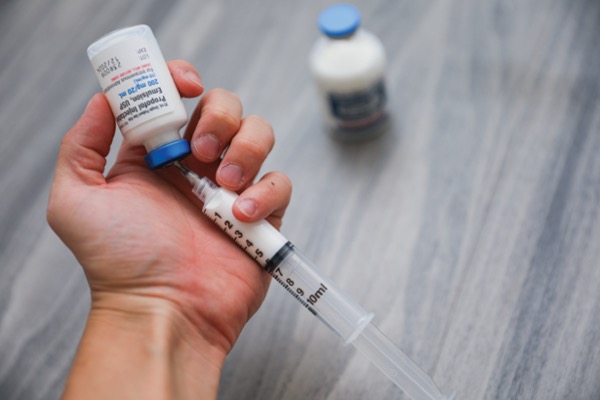
The retrospective, single-center cohort study evaluated 18,302 outpatient GI endoscopic procedures, including 7,162 esophagogastroduodenoscopies (EGDs) and 11,140 colonoscopies, at IRCCS San Raffaele Hospital in Milan between May 2019 and November 2021. All patients were ranked ASA class I or II. In each procedure, a specialized nurse managed the sedation. An on-call anesthesiologist was also available in case of emergencies.
A total of 1.3% procedures had adverse events (AEs) (n=240), with no differences observed between EGD and colonoscopies (P=0.418). All AEs were mild and successfully managed by the gastroenterologist without intervention from the anesthesiologist.
Age was associated with AEs in both the univariate (P<0.001) and multivariate (odds ratio, 1.02; 95% CI, 1.01-1.03; P<0.008) analyses. In the univariate analysis, patients with diabetes also were more likely to experience AEs (P=0.004).
Hypoxia was the most frequent complication, with 143 events mostly occurring during colonoscopy (n=95, 0.7%) compared with EGD (n=48, 0.6%) (P<0.001).
Two or more AEs occurred in 10 procedures (0.1%).
After the procedure, 98.9% of patients (n=15,875) said they would opt for the same sedation protocol for future procedures.
The SIGE Score
Gastrointest Endosc 2024;99(1):10-20
Researchers in the United States developed a novel scoring system to predict recurrent GIB in patients who have undergone cardiac catheterization with PCI.

In this study, researchers conducted a single-center, retrospective cohort study of 536 patients who underwent cardiac catheterization with PCI between January 2008 and April 2022. The primary end point was GIB at 180 days, and the secondary end point was recurrent bleeding or major adverse cardiovascular events (MACEs) at 365 days.
They found PCI for acute coronary syndrome was associated with a 95% greater likelihood of GIB (P<0.001), and recurrent bleeding was associated with a 115% increased risk for MACEs (P=0.02).
The researchers then developed the novel score, called SIGE, to predict recurrent bleeding, given its association with increased risk for MACEs. SIGE stands for patients having an ST elevation myocardial infarction at PCI, a labile international normalized ratio at PCI, index GIB within 180 days of PCI and previous pre-catheterization endoscopy within six months. Points of 1.0, 1.5, 1.0 and 2.0 were assigned to each letter based on their adjusted odds ratio to derive a scoring system of 0 to 5.5.
The researchers found that the score was highly predictive of recurrent GIB at 365 days (area under the curve, 0.773; 95% CI, 0.702-0.845). A score of 0 indicated a risk for recurrent GIB of 10%, and a score of 4.5 or above indicated a risk for recurrence of 100% (risk ratio, 10.0; P=0.001). The SIGE score allowed researchers to use four known variables at the time of GIB to predict recurrent GIB at one year.
The SIGE score still needs to be externally validated.
Octreotide to Reduce Transfusions
Gastroenterology 2023 Dec 27. doi:10.1053/ j.gastro.2023.12.020
In a multicenter, open-label, randomized controlled trial in the Netherlands, researchers evaluated how effective the drug octreotide was at reducing the number of transfusions patients with angiodysplasia-related anemia needed over the course of one year.

From September 2015 to April 2021, 62 total patients were enrolled in the study across 17 Dutch hospitals. The patients were randomized so that 31 received standard-of-care treatment and 31 received standard of care plus octreotide. Patients in the study group received two intramuscular long-acting octreotide injections (Sandostatin LAR Depot, Novartis) of 20 mg every 28 days.
At the end of the study, octreotide had reduced the mean number of transfusions for patients in that group by 10.2 (95% CI, 2.4-18.1; P=0.012). Patients in the octreotide group had a mean of 11.0 transfusions (95% CI, 5.5-16.5), and patients in the standard-of-care group had a mean of 21.2 transfusions (95% CI, 15.7-26.7).
Patients on octreotide experienced other benefits as well, such as fewer bleeding episodes and less fatigue. However, they also experienced more AEs compared with patients on standard of care (50 AEs in 22/31 patients on octreotide vs. 37 AEs in 21/31 patients on standard of care). The most common drug-related AEs were GI side effects (19/50), pain at administration site (9/50) and glucose intolerance (3/50). In addition, the mortality rate was higher in the octreotide group than in the standard-of-care group (5 vs. 2), although the investigators concluded the mortality in each case was unrelated to the drug.
Ultimately, they concluded that physicians should consider octreotide for this patient group.
Dr. Sharma is a member of the Gastroenterology & Endoscopy News editorial board.


This article is from the March 2024 print issue.