






School of Medicine
Kansas City
In this issue of Sharma’s Endoscopy Insights, I focus on the most common GI procedure—colonoscopy—and its associated quality metrics, highlighting studies that bring to light ways to reduce post-colonoscopy colorectal cancer.
Adenoma detection rate (ADR) is a well-defined quality metric in colonoscopy. Recently, experts are proposing an additional outcome: adenomas per colonoscopy (APC). In the first study I review, investigators showed that endoscopists with a higher APC at index colonoscopy had a decreased risk for post-colonoscopy CRC. This is an important step to validate APC as an important quality measure.
Endoscopists are continuing to employ several techniques to reduce the adenoma miss rate (AMR). In the second study I discuss, a multicenter tandem colonoscopy study, a distal attachment led to a significant reduction in the AMR but not the ADR compared with standard colonoscopy. The AMR in both study groups shows that we continue to miss these lesions during colonoscopy.
The use of the fecal immunochemical test (FIT) as a population-based screening test for CRC is supported by guidelines, and it is clear that people with a positive FIT need a subsequent colonoscopy. Results of this third study showed that individuals with a positive FIT who did not adhere to a subsequent colonoscopy had a higher risk for CRC incidence and mortality, and this risk was more pronounced in younger individuals.
Adenomas Per Colonoscopy
Gastrointest Endosc 2023 Nov 20. doi:10.1016/j.gie.2023.11.014
Researchers in the United States compared APC with ADR as a measure of colonoscopy quality. Using data from the New Hampshire Colonoscopy Registry, the researchers evaluated 32,535 patients who underwent an index exam and at least one follow-up event—either colonoscopy or CRC diagnosis—as well as the 152 endoscopists who performed the index exams.
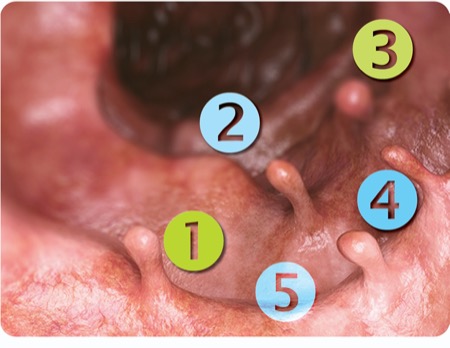
They divided the endoscopists into five groups based on their APCs, ranging from endoscopists with an APC lower than 0.25 to those with a score of 0.70 and higher.
The investigators found that 178 CRCs were diagnosed at least six months after the index exam. Patients who had their exams performed by endoscopists with higher APCs had a lower risk for post-colonoscopy CRC than those whose exams were performed by endoscopists with APCs below 0.25.
One-fifth of endoscopists had an ADR of at least 25 but had an APC lower than 0.50. This group had a significantly higher risk for patient post-colonoscopy CRC than those with ADR of at least 25 but APC greater than 0.50 (hazard ratio [HR], 1.65; 95% CI, 1.06-2.56).
The researchers noted that their data and findings of other studies have found a higher APC to be linked to better outcomes, regardless of ADR. They concluded that APC may be a better way to determine colonoscopy quality than ADR because it credits physicians for their ability to clear the colon of all adenomas.
A Distal Attachment Cuff
Gastrointest Endosc 2023 Nov 20. doi:10.1016/j.gie.2023.11.017
In this international, multicenter randomized colonoscopy trial, researchers compared the ADR and AMR between endoscopists using a distal attachment cuff (Endocuff Vision, Olympus) (EVC) and those performing a conventional colonoscopy (CC).
The study included 717 patients at 10 hospitals in Germany, Greece, Hong Kong, Italy, the Netherlands and the United States. Patients were randomly assigned to undergo CC or EVC first, directly followed by either CC or EVC. This meant patients were randomly assigned to one of four groups: CC followed by CC, CC followed by EVC, EVC followed by CC, and EVC followed by EVC.
The final analysis included 661 patients, 646 of whom had a completed second procedure. Endoscopists were told right before each procedure what type of procedure (CC or EVC) they would be performing.
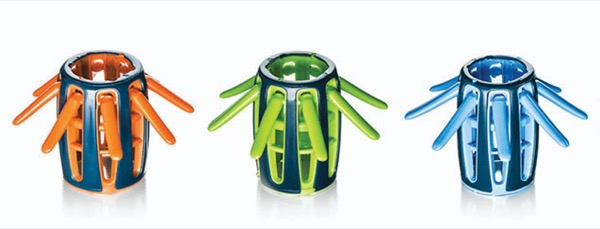
The researchers found that EVC reduced AMR by 11.7% (29.6%; 95% CI, 23.6%-36.5% vs. 17.9%; 95% CI, 12.5%-23.5%, respectively; P=0.049). However, they found that EVC did not significantly improve ADR compared with CC (41.1%; 95% CI, 36.1%-46.3% vs. 35.5%; 95% CI, 30.8%-40.6%, respectively; P=0.125).
In addition, there was no significant difference in the AMR between patients who received two CCs and those who received two EVCs (25.9%; 95% CI, 19.3%-33.9% vs. 18.8%; 95% CI, 13.9%-24.8%, respectively; P=0.172).
Follow-up Colonoscopy Adherence
Gastroenterology 2023;165(6):1558-1560
A large, population-based cohort study in China found an increased risk for CRC and CRC mortality in patients who did not get a follow-up colonoscopy after a positive FIT.
The study included 595,180 individuals between 40 and 74 years of age who had undergone FIT since 2007 in China. Participants with a positive FIT result who received a referral for colonoscopy were included in the study. Ultimately, the study included 42,353 patients who adhered to getting the follow-up colonoscopy and 32,070 patients who did not.

The risk for CRC and CRC-related death was higher among patients who did not receive a colonoscopy than for those who did (CRC risk: HR, 1.25; 95% CI, 1.09-1.43; death risk: HR, 1.85; 95% CI, 1.36-2.50). Among patients who received follow-up colonoscopy, the 10-year cumulative incidence of CRC was 12.84 cases per 1,000 and CRC mortality was 2.48 per 1,000. In contrast, among patients who did not get the recommended colonoscopy, CRC incidence was 17.15 cases per 1,000, with a mortality rate of 5.63 per 1,000.
When stratifying by age, the researchers found that patients between 40 and 49 years old who did not receive a follow-up colonoscopy had an increased risk for CRC (HR, 2.02; 95% CI, 1.22-3.04) compared with patients between 50 and 64 years (HR, 1.34; 95% CI, 1.10-1.62) and patients 65 to 74 years (HR, 1.06; 95% CI, 0.85-1.31).
The results indicate that failing to receive a follow-up colonoscopy after a positive FIT result increased the risk for distal CRC and related death.
Dr. Sharma is a member of the Gastroenterology & Endoscopy News editorial board.


This article is from the February 2024 print issue.