





DENVER—Self-dilation significantly extends the time between endoscopic dilation for patients with refractory benign esophageal strictures, according to data presented at the 2024 American Foregut Society’s annual meeting.
Results of a 10-year study showed that the dilation-free interval could be extended beyond one year, with the number of endoscopic dilations substantially reduced.
“Self-dilatation provides an autonomous solution for patients with refractory benign esophageal strictures, empowering them to manage their condition and reducing their reliance on frequent hospital visits,” said Vinay Sehgal, MBChB, MRCP, PhD, a consultant gastroenterologist and an interventional endoscopist at University College Hospital London.
Benign esophageal strictures generally are manageable with endoscopic dilation, with more than 90% of patients responding well to standard treatments, Dr. Sehgal explained. However, a subset of 10% to 40% of patients develop refractory strictures that require more frequent and complex management.
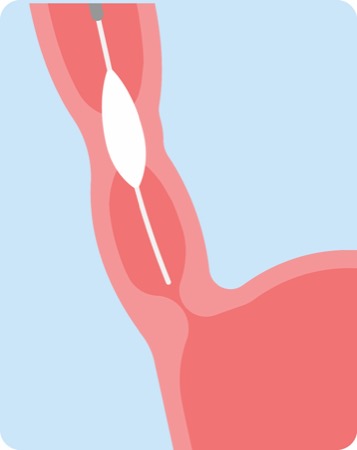
“Refractory strictures, defined as those requiring dilation every two weeks or failing to maintain a 14-mm diameter after dilation, present a major challenge in clinical practice,” Dr. Sehgal said. “These patients often return for multiple dilations, adding strain to both healthcare resources and their personal well-being.”
Dr. Sehgal and his co-investigators conducted a retrospective observational study, assessing the effectiveness and safety of self-dilation in patients with refractory benign esophageal strictures over the course of a decade. The study, which included 43 patients who were trained in self-dilation at University College Hospital London, is the second-largest data set on this topic in Europe.
The researchers analyzed patient characteristics, the etiology and location of the strictures, and pre- and post-self-dilation outcomes. The primary outcome was the endoscopic dilation–free interval, defined as the time between required endoscopies before and after patients began self-dilation. Secondary outcomes included improvements in dysphagia scores, technical success rates and complication rates.
Patient Autonomy, Extended Treatment-Free Periods
They found that the median dilation-free interval increased from 60 to 405 days for patients trained in self-dilation. In addition, the need for endoscopic dilation in this group decreased from seven per year to one per year. Dysphagia scores also showed considerable improvement after the initiation of self-dilation.
“Extending the dilation-free interval to more than a year is truly encouraging, and it underscores the potential for self-dilatation to revolutionize the management of refractory esophageal strictures,” Dr. Sehgal emphasized, noting that this offers patients more freedom from the hospital and enhances quality of life.
According to Dr. Sehgal, the median stricture diameter was 15 mm, and some patients presented with complex, multi-segment strictures that were more challenging to treat. The investigators reported one case of hematemesis, which was managed conservatively, and one case of esophageal perforation, which required surgery. This latter complication occurred in a patient with a radiation-induced stricture, a group known to have a higher risk for complications.
“While self-dilatation carries some risks, the complication rate is comparable to that of standard endoscopic therapy,” Dr. Sehgal said, highlighting the importance of selecting the right patients and ensuring thorough training. “Self-dilatation offers a safe and effective option for patients with refractory esophageal strictures, but it’s crucial to ensure that we carefully select and educate the right patients for this procedure.”
He said that “more prospective, multicenter studies are needed to further validate our findings and refine this promising approach.”
During the Q&A session, Roman Petrov, MD, PhD, MBA, the chief of thoracic and esophageal surgery at The University of Texas Medical Branch, in Galveston, commented on the challenges associated with self-dilation and asked Dr. Sehgal about some of the specifics of the approach. “How do you choose the size of the dilator to start patients with, and do they perform self-dilation daily, or is there a set schedule with intervals between sessions?”
Dr. Sehgal explained that his team typically aims for a luminal diameter of 14 to 15 mm endoscopically, which provides enough room for the patient to use the dilator at home, but there is no one-size-fits-all approach. “Initially, we have them do it daily, but the frequency can vary,” he said. “Some patients do it twice daily, depending on their needs, and it’s a lifelong intervention for many of them.”
Dr. Sehgal reported no relevant financial disclosures.
This article is from the December 2024 print issue.