





PHILADELPHIA—Patients with cirrhosis undergoing endoscopic mucosal resection for colorectal polyps face a higher risk for post-procedural bleeding than non-cirrhotic patients, according to new findings presented at ACG 2024.
Results of the retrospective, propensity score–matched cohort study revealed that patients with cirrhosis had significantly higher post-EMR bleeding rates (5.3%) than controls (3.9%), as well as a greater need for blood transfusions and emergency care services.
“Our study identified key risk differences in a large U.S. sample that can inform clinical decision-making and guide further research on the safety of EMR in patients with cirrhosis,” said lead investigator Azizullah A. Beran, MD, a gastroenterology fellow at Indiana University School of Medicine, in Indianapolis.
As Dr. Beran explained, EMR is increasingly the treatment of choice for large colorectal polyps due to its ability to safely and effectively remove benign lesions more than 20 mm in size. However, patients with cirrhosis are at an inherently higher risk for complications such as GI bleeding after invasive procedures due to factors such as thrombocytopenia, reduced coagulation factor synthesis and portal hypertension.
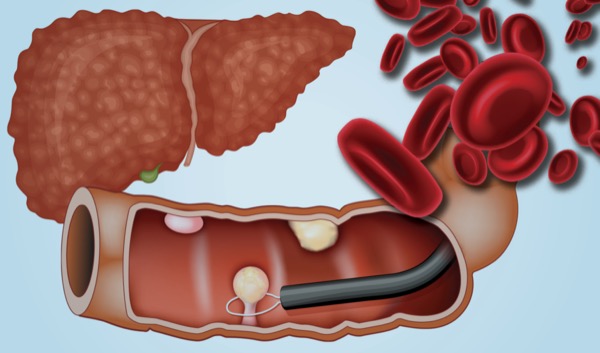
Using the U.S. Collaborative Network database in the TriNetX platform, Dr. Beran and his co-investigators reviewed the records of patients who underwent colorectal EMR, identifying two cohorts—one with cirrhosis and one control group without chronic liver disease (oral presentation 30). The analysis, which won an ACG Outstanding Research Award, included 4,274 patients (2,137 with cirrhosis and 2,137 controls). The researchers performed one-to-one propensity score matching on age, sex, race, ethnicity and clinical factors such as hypertension, diabetes, chronic kidney disease, thrombocytopenia, and use of antiplatelet or anticoagulant medications.
The primary outcome was post-EMR bleeding risk within 30 days, and secondary outcomes included endoscopic reinterventions, emergency department (ED) visits, inpatient admissions and ICU admissions.
Increased Bleeding Risk, Transfusions and ED Visits
Related Content


The propensity score–matched analysis showed that patients with cirrhosis had a 38% higher likelihood of post-EMR bleeding compared with the control group (odds ratio [OR], 1.38; P=0.02). Patients with cirrhosis also demonstrated a significantly greater need for blood transfusions (OR, 2.09; P=0.02) and had higher rates of ED visits (OR, 1.64; P<0.001) and inpatient admissions (OR, 1.44; P=0.002).
However, there was no statistically significant difference between the two groups in the need for ICU admission (OR, 1.30; P=0.31) or endoscopic reinterventions to control bleeding (OR, 0.80; P=0.42).
In patients with decompensated cirrhosis, bleeding rates were even higher, with 8.9% experiencing post-EMR bleeding compared with 5.3% of matched controls, indicating a notably increased risk (OR, 1.73; P=0.03).
Dr. Beran said the findings suggest that although patients with cirrhosis face an elevated bleeding risk, careful pre-procedural management and post-procedural monitoring potentially can mitigate adverse outcomes. “As more GI centers adopt EMR as standard of care, these findings underscore the importance of pre-procedural optimization and specialized care protocols for patients with cirrhosis.” He said “this might include assessing coagulation status, addressing thrombocytopenia and potentially exploring prophylactic measures such as clipping for hemostasis in selected cases.”
However, conservative, supportive management may suffice for managing post-EMR bleeding in patients with cirrhosis, Dr. Beran said, given that rates of endoscopic reintervention did not significantly differ between patients with cirrhosis and the control group.
Limitations and Considerations
The study’s retrospective design and use of a de-identified database presented some limitations, including potential confounding variables and the inability to assess lesion size, EMR technique (hot vs. cold) or the use of prophylactic clipping for hemostasis. Dr. Beran also acknowledged that although the study used robust propensity score matching, some selection bias and data granularity limitations remain inherent to retrospective analyses.
“Further prospective studies are needed to confirm these findings, evaluate the role of prophylactic measures beyond current guidelines and assess potential benefits of cold EMR resection techniques in minimizing bleeding risk,” Dr. Beran said.
Robert John Fontana, MD, a professor of gastroenterology, internal medicine and transplant hepatology at University of Michigan Health, in Ann Arbor, praised the study as “an important topic I deal with every day” and raised two key questions. He asked whether the study differentiated between intraprocedural and delayed bleeding and noted the high prevalence of antiplatelet and anticoagulant use (20%-40%) in both groups, inquiring whether these medications were held before the procedure.
In response, Dr. Beran clarified, “We focused on delayed bleeding here, recording any bleeding within 30 days post-EMR, so our data primarily reflect delayed bleeding rather than intraprocedural events. As for antiplatelet and anticoagulant use, the data lack that level of granularity, but since EMRs are elective, we assume current guidelines on holding medications were followed, though exact details weren’t available.”
Drs. Beran and Fontana reported no relevant financial disclosures.
This article is from the December 2024 print issue.