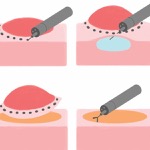


Starch-based polysaccharide solution offers superior outcomes compared with crystalloid-oil emulsion solution (COES) as a lifting agent during colonic endoscopic mucosal resection and endoscopic submucosal dissection, a new study suggests.
“SPS [starch-based polysaccharide solution] colonic submucosal injection appears to be beneficial over COES, as it is associated with lower intraprocedural bleeding, less adverse events, shorter procedures, and more frequent en bloc resections,” wrote the investigators, from UC Davis Medical Center, in Sacramento, California (World J Gastrointest Endosc 2025;17[9]:109396).
The study, led by Sartajdeep Kahlon, MD, included 178 patients who underwent colonic EMR or ESD between March 2021 and November 2023, with 99 patients receiving SPS and 79 receiving COES for submucosal injection.
The investigators found that average procedure time was 22 minutes shorter in the SPS group (96 vs. 117 minutes; P<0.05). Intraprocedural bleeding requiring intervention occurred 24.1% more frequently in the COES group (44.3% vs. 20.2%; P<0.01). Within 30 days post-procedure, adverse events occurred 9.37% more often with COES (11.4% vs. 2.0%; P<0.01).
En bloc resection was achieved 22.2% more frequently with SPS injection (32.3% vs.10.1%; P<0.01).
The latter finding has important clinical implications, the investigators wrote, as en bloc resection is preferred over piecemeal resection due to lower recurrence rates, particularly for large polyps.
A subgroup analysis of right-sided colon lesions demonstrated even more pronounced benefits. For all right-sided colon polyps, intraprocedural bleeding occurred in 35.7% of COES cases compared with 12.7% of SPS cases (P<0.01). Among large polyps (≥2 cm) in the right colon, bleeding rates were 45.5% higher with COES (P<0.01).
At 30 days, the rate of adverse events was 9% more common in the COES group (P<0.01). Two 30-day adverse events occurred in the SPS group, two incidental rectal bleeding episodes not requiring admission. In contrast, the COES group experienced nine adverse events, including six cases of delayed bleeding and three bowel perforations requiring admission and surgery.
The investigators noted that SPS’s dual role as a lifting agent and potential hemostatic agent may explain its superior performance. The starch-based polymer can absorb water and act as a scaffolding substance for aggregating coagulation components, potentially promoting local hemostasis, they explained.
“Submucosal injection with … SPS is a promising intraprocedural tool that may lead to reduced intraprocedural complications via its submucosal lifting characteristics as well as its potential hemostatic effect,” the investigators noted, adding that “these solutions may bolster complete resection and reduce the risk of recurrence of nonpedunculated colonic lesions.”
They noted a need for continued research into the ideal submucosal injection solution, accounting for relative cost, adequate density, ease of administration, lift time, and likelihood of adverse events. They also acknowledged that all the procedures were performed by a single advanced fellow under supervision of one attending physician at a tertiary medical center, which may limit generalizability.
—David Wild
Dr. Kahlon reported no relevant financial disclosures.