





SAN DIEGO—When patients chose to remain awake during colonoscopy, allowing them to use their smartphones lessened their pain, according to a study presented at DDW 2025.
European countries typically do not use procedural anesthesia during colonoscopies, said lead researcher Jabed Ahmed, MD, of Imperial College Healthcare NHS Trust, in London, but he noted that higher pain scores and higher anxiety before the procedure are among the factors found to predict an unwillingness to repeat procedures (World J Gastroenterol 2014;20[17]:5113-5118).
“There is not a formal research body on discomfort during colonoscopies, and a lot of different factors can contribute to pain,” including the nervousness of the patient, their gender, a GI’s previous experience with colonoscopies and drug allergies, Dr. Ahmed said.
Dr. Ahmed and his co-investigators tested strategies to lower pain and discomfort in real time to examine how a patient’s nervousness affected their reported discomfort. Their observational study, which included 60 patients (32 men and 28 women who were 47 years of age, on average) and seven endoscopists associated with the Imperial College Healthcare NHS Trust, took place between September 2023 and March 2024.
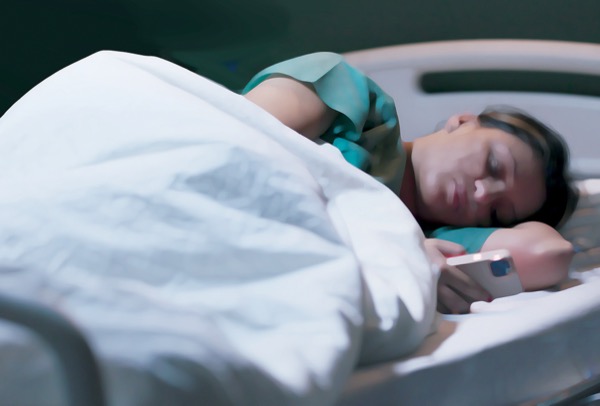
The patients were given a vest to wear to record their physiologic measurements throughout the procedure and randomized into three groups: standard colonoscopy, colonoscopy while listening to the most popular works of Johann Sebastian Bach or colonoscopy while using their smartphones (n=20 for all groups).
Patients in the smartphone group had the liberty to choose whatever tasks they wanted to do on their phones as long as they did not make calls or take photos, videos or recordings of the procedure. Most opted to check their social media, email and browse the internet throughout the procedure. Physiologic measurements included heart rate, body positioning and temperature.
The respiratory rate for the standard group was slightly higher, at 13.7 breaths per minute (SD, 6.14) than the music and smartphone groups, both of which experienced a mean respiratory rate of 13.2 breaths per minute. However, the music group showed a mean heart rate of 107.3 (SD, 37.95), which was higher than the standard or smartphone groups. The mean heart rate for the standard arm was 84.9 (SD, 23.51) and 80.54 for the smartphone group (SD, 27.14).
Other data gathered include the difficulty and technique of the procedure and patient feedback. In this interval analysis, all patients in the three groups reported satisfaction with their intervention.
The study is ongoing, and as of July 2025, 534 patients had been recruited for the study. Dr. Ahmed is in the process of analyzing the entire data set.
Olufemi Kassim, MD, a gastroenterologist at Northwestern Medicine, in Chicago, who was not involved in the study, said in the United States, and at Northwestern specifically, the “vast majority” of patients opt for sedation for their colonoscopies, whereas anesthesia is less common. The fear of pain does put patients off from wanting to complete routine colonoscopies, Dr. Kassim said, noting that she often speaks directly with patients on expectations during a colonoscopy to assuage their fears and anxiety about pain.
“I would definitely welcome more data on this subject,” Dr. Kassim said, noting that patients are individuals who prioritize different things. Sometimes they’re fearful of pain, others are squeamish about the procedure and want to be unconscious, while others find anesthesia unsettling or scary and prefer conscious sedation.
Dr. Kassim said she has not had patients use their cellphones during procedures, but “would not be opposed” to that because she’s always in favor of allowing patients any comfort or distraction to help them better tolerate a procedure.
—Karen Fischer
Drs. Ahmed and Kassim reported no relevant financial disclosures.



This article is from the September 2025 print issue.