






University of Kansas
School of Medicine
Kansas City, Kansas
In this edition of Sharma’s Endoscopy Insights, I focus on measures to reduce medical waste and greenhouse gas emissions from endoscopy units, and I discuss a study examining the effect of IV dextrose on dizziness after propofol sedation.
Gastrointestinal endoscopy continues to be a major contributor to greenhouse gas emissions. Multiple studies have confirmed this finding, and the first study I discuss showed that targeted interventions—including the education of endoscopy unit personnel and use of a structured waste disposal protocol—can substantially reduce medical waste associated with procedures in an endoscopy unit.
The use of propofol for deep sedation can lead to dizziness and post-sedation fatigue in patients after GI endoscopy procedures. The second study I highlight is a randomized controlled trial that found that the use of IV dextrose while patients recover from deep sedation led to a significant reduction in post-procedure dizziness.
Reducing Environmental Impacts in Endoscopy
Endoscopy 2025 Aug 19. doi:10.1055/a-2661-1820
In a prospective interventional study in Italy, investigators explored whether a waste management protocol could help reduce the volume of regulated medical waste (RMW) generated during GI endoscopy procedures. Disposing of RMW is resource-intensive, and reducing its volume could help lower the environmental impact and greenhouse gas emissions associated with such procedures, the investigators hypothesized.

The study was conducted at five endoscopy suites at a hospital in Italy from April to June 2023, with a follow-up period from July through September of that year. Researchers installed two additional recycling bins for paper and plastic in each endoscopy suite next to existing RMW and non-RMW bins. They also conducted staff training on waste separation protocols and designated a nurse to conduct daily compliance checks and support the nursing staff, which was largely responsible for waste sorting.
Data were collected by the hospital’s waste management department using an automated system, and carbon emissions were estimated based on data from the International Energy Agency and the United Kingdom. Waste levels during the study period were compared with waste levels during the same period the year before (2022).
Over the course of the intervention, the production of RMW decreased by 24.1%, from 1.91 kg per procedure (95% CI, 1.54-2.28) to 1.45 kg per procedure (95% CI, 1.16-1.73; P=0.02). The waste reduction was sustained during the follow-up period (1.48 kg per procedure; 95% CI, 0.84-2.12).
This dip in RMW led to a 33.3% reduction in greenhouse gas emissions, the investigators estimated (net difference of 1.23 kg of carbon dioxide equivalent per procedure; P=0.02) and a cost savings of about 3,542±384 euros ($4,125±$447).
While multicenter, longer-term studies are necessary to confirm the findings, the investigators concluded that a structured waste segregation program and staff education can help optimize waste management in endoscopy centers.
Reducing Postprocedural Dizziness
Gastrointest Endosc 2025 Aug 18. doi:10.1016/j.gie.2025.08.014
In this randomized controlled trial, researchers in China investigated whether dextrose helps reduce postprocedural dizziness following propofol-based deep sedation during GI endoscopy.
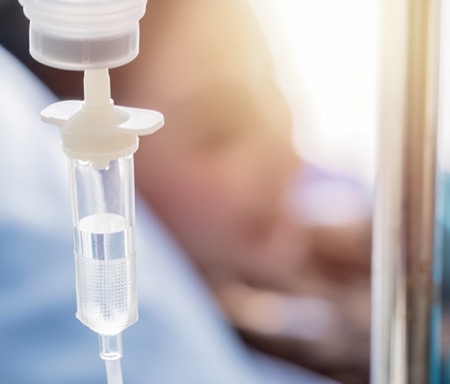
At a hospital in Northern China, 102 adults undergoing GI endoscopy between March and June 2024 were randomized to receive either 200 mL of IV 5% dextrose (intervention) or 0.9% sodium chloride (control) at a rate of 400 mL per hour as they emerged from deep sedation following the procedure.
Independent assessors using standardized criteria evaluated the incidence and severity of dizziness using a 0- to 100-mm visual analog scale, with 0 mm indicating no dizziness and 100 mm representing worst possible dizziness.
The incidence of dizziness was significantly lower in patients who received the 5% dextrose compared with those who received the saline control (21.6% vs. 51.0%; P=0.002). Patients in the dextrose group experienced less severe dizziness compared with the control group at 15 and 30 minutes (P=0.005 and P<0.001, respectively) after surgery. Patients receiving dextrose also had a better Quality of Recovery-40 score (P=0.030).
However, the researchers found no significant difference in the emergence time (P=0.349) or severity of postoperative nausea and vomiting between the two groups (30 minutes, P=0.091; two hours, P=0.80).
Dextrose could be a simple, low-cost intervention to reduce the common problem of postoperative dizziness, the investigators concluded.


This article is from the November 2025 print issue.