





Questions about endoscope reprocessing abound: Will putting simethicone in an endoscope impede cleaning? Do duodenoscopes need two rounds of high-level disinfection in a row? What about sterilizing semi-critical devices associated with higher infection transmission risk, such as duodenoscopes? To address some of these common concerns, new multisociety guidance reviews and clarifies evidence on sterilization and HLD of reusable medical devices, accessories and patient care items, including lumened endoscopes.
Developed by the Society for Healthcare Epidemiology of America (SHEA) in partnership with seven professional organizations, including the American Society for Gastrointestinal Endoscopy (ASGE), Society of Gastroenterology Nurses and Associates (SGNA) as well as The Joint Commission (Infect Control Hosp Epidemiol 2025 Apr 28. doi:10.1017/ice.2025.41), the guidance follows the 2024 update of the 2008 CDC Guideline for Disinfection and Sterilization in Healthcare Facilities (doi:10.1017/ice.2025.41; cdc.gov/infection-control/hcp/disinfection-sterilization/updates.html).
“Sometimes clinical practice just develops because of local culture or because someone heard something, or they thought this is what you’re supposed to do,” said guideline coauthor Audrey Calderwood, MD, MS, who represented the ASGE in the partnership. “This document can serve as a guide on what the evidence says is necessary to do, required to do and where is the evidence lacking,” added Dr. Calderwood, a professor of medicine and the director of the Comprehensive Gastroenterology Program at Geisel School of Medicine at Dartmouth, in Lebanon, N.H.
New recommendations include advice on interpreting manufacturers’ instructions for use (IFUs), point-of-use treatment, HLD of semi-critical devices, defoaming agents, storage and alternatives to HLD. The authors revised recommendations on assessing the effectiveness of reprocessing.

“There’s a lot of misinterpretation … when you have these standards out there: Well, what do I follow? What is a must, what is a should, what is a think-about?” said Aaron Preston, RN, BSN, AL-CIP, CIC, a senior coordinator of infection prevention at Emory University Hospital Midtown, in Atlanta, who was not involved in developing the guidance. However, he said, a section detailing The Joint Commission’s hierarchical approach to infection prevention and control compliance was explained in an understandable way.
In addition to the SHEA, ASGE and SGNA, organizations represented were the Association for Professionals in Infection Control and Epidemiology (APIC), the Association for the Advancement of Medical Instrumentation (AAMI), the Association of periOperative Registered Nurses (AORN), the Healthcare Sterile Processing Association (HSPA), and the Infectious Diseases Society of America (IDSA).
The SHEA, APIC, ASGE, SGNA and IDSA endorsed the guidance, and the AAMI, AORN, HSPA and The Joint Commission did not. An AAMI spokesperson replied that its status as a “neutral convener” prohibited comment, and a Joint Commission spokesperson cited its policy not to endorse evidence-based guidelines of specialty societies or other organizations. The AORN and HSPA did not reply to an email from this publication requesting comment.
Reprocessing Duodenoscopes
Double HLD became more common after mid-2010s outbreaks of carbapenem-resistant Enterobacteriaceae among patients who had undergone endoscopic retrograde cholangiopancreatography with duodenoscopes, but current evidence does not support policies requiring duodenoscopes to undergo double HLD or sterilization, the authors concluded.
“People have been doing that out of caution to prevent risk of infection,” Dr. Calderwood said. “That’s probably not necessary.”
The document takes a nuanced approach, recommending that facilities “begin developing an institutional process for converting from HLD to sterilization” for these devices. Furthermore, it states that facilities “may choose to evaluate sterilization along with other alternatives to HLD,” such as sterile single-use devices.
“I think endoscopy units can feel safe and secure knowing that if high-quality, regular, high-level disinfection, which includes all the things—manual inspection, mechanical cleaning, putting in the machine, etc.—if all of that is done in a high-quality way, at this time, no evidence suggests benefit from doing double, extra or something different,” Dr. Calderwood said.
Points of Contention
Medical device safety expert Lawrence Muscarella, PhD, said the guidance was “fairly good” but expressed some misgivings. “A lot of the guidance made sense to me,” said Dr. Muscarella, who has published on outbreaks linked to contaminated reusable devices. “There were, though, a number of sections that did not.”
Dr. Muscarella expressed concerns about what struck him as an unclear relationship between this document and the CDC guidelines. He also said he disagreed with the decision not to invite public comments or to issue a recommendation relating to testing the quality of water used in device processing. He cited a passage that stated that Pseudomonas was among several organisms cultured during pseudo-outbreaks linked to contaminated rinse water but, according to the guidance, none were found to be clinically significant.
“Endoscopes contaminated with waterborne gram-negative bacteria, including Pseudomonas, following reprocessing have been linked to multiple true patient infections. That is not consistent with what’s written in this paragraph,” Dr. Muscarella said.
To be sure, he added, the problem has been reduced because hospitals generally filter the rinse water to remove bacteria, “but filters don’t have alarms on them or bells that go off when they’re failing, so it can be unclear when they require changing unless periodic microbiological testing is performed.” In contrast, he said, the AAMI and his own publications have recognized “the importance of water quality across all stages of endoscope reprocessing.”
Dr. Muscarella also expressed concerns with several other recommendations, including one deeming parts of semi-critical instruments to be not critical for reprocessing purposes and some relating to immediate-use steam sterilization.
Knowledge Gaps and Unanswered Questions
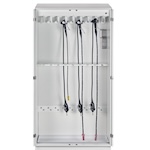
The authors did not find evidence to indicate that special drying cabinets prevent transmission of infection. “They might; they may not,” Dr. Calderwood said. “I think as long as the scopes are stored in a safe, clean and dry place and can be locked, that’s the main thing.”
The committee made no recommendation regarding how long an endoscope can be stored before it should be processed again or replaced beyond following specific manufacturer IFUs, nor did it make a recommendation about routine monitoring with microbial cultures to assess HLD effectiveness.
As for adding simethicone to a lumened semi-critical reusable device such as a colonoscope, the authors recommended following the IFUs and avoiding putting simethicone into the irrigation water bottle.
In an appendix, the document lists knowledge gaps, including questions about lubricating agents and infection risk; removing non–water-soluble lubricants; boroscopes; and optimal retraining for staff who clean, process and maintain scopes.
Mr. Preston pointed out that there aren’t enough data yet linking some interventions to patient outcomes and cautioned against automatically abandoning a practice about which the multisociety panel made no recommendation. “I don’t want people to read that if there’s no recommendation, that means you don’t do the practice at all,” he said. “I think what it means is that there’s more to be understood about frequency and impact [on] outcomes.”
—Jenny Blair
Dr. Calderwood and Mr. Preston reported no relevant financial disclosures. Dr. Muscarella reported a financial relationship with Ambu.

This article is from the September 2025 print issue.