





Removable, disposable endcaps have significantly reduced the risk for infection in duodenoscopes. However, user error in securing the parts can present a new patient safety issue.
The FDA started recommending that healthcare facilities move away from fixed endcaps and adopt the use of disposable endcaps in 2019 as one strategy to reduce the risk for infection.
But if disposable endcaps, including distal covers and elevator endcaps, are damaged or not properly placed before a scope is used, the caps can dislodge during a procedure.
“It’s mostly an error of how they are placed rather than their inherent design,” Manol Jovani, MD, MPH, a therapeutic endoscopist at Maimonides Medical Center, in Brooklyn, N.Y., said of the parts.
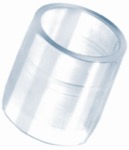
In addition to improper placement, using damaged or expired products also could be part of the issue, said Nauzer Forbes, MD, MSc, an associate professor of medicine in gastroenterology and advanced endoscopy at the University of Calgary, in Alberta.
Recalls and Retraining
The FDA has expressed concern over incidents involving endcaps made by each of the three largest manufacturers—Fujifilm, Olympus and Pentax—and has pushed manufacturers to initiate several endcap recalls since 2021 in an effort to mitigate the risk of the caps dislodging in patients.
The most recent manufacturer recall was initiated by Olympus in December 2023 after the FDA expressed concern that the company’s Single Use Distal Cover MAJ-2315 devices could dislodge and cause mucosal injury, tissue damage, bleeding, perforation or gastrointestinal tract obstruction. The recall also stated that an uncovered duodenoscope distal end could burn patients and noted the possibility that a dislodged cap could restrict the airway if it comes loose in a patient’s throat.
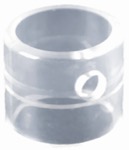
“Olympus sent a letter to its customers in December 2023 reinforcing the instruction for use for the Single Use Distal Cover. Furthermore, Olympus representatives scheduled on-site, in-service training at customer facilities reinforcing the instructions for MAJ-2315 distal cover attachment and user verification of distal cover attachment. Since that time, Olympus representatives have completed more than 1,000 in-services with customers,” said Jennifer Bannan, a spokeswoman for Olympus Corporation of the Americas, adding that the company is continuing to monitor user feedback on the model of endcap.
This latest recall came after two earlier ones. Earlier in 2023, the FDA had issued a warning letter to Olympus citing “160 complaints describing the ‘distal end cover’ model number MAJ-2315 has ‘dropped out.’” Olympus issued an initial recall for the endcaps in April 2023, which resulted in a redesign of the caps and a request for users to stop using the old model. In the December recall, Olympus initiated endoscopy staff retraining on how to properly secure and remove endcaps at the end of a procedure.
Several FDA Manufacturer and User Facility Device Experience (MAUDE) reports since 2019 have reported distal covers on Fujifilm ED-580XT scopes detaching, although the issues were determined to be user error. The company sent a safety notification to all existing customers in April 2020 and provides education to those who purchased the scopes after that period.
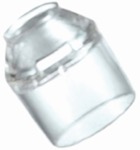
“The health and safety of patients is Fujifilm’s number one priority, and duodenoscopes, like our Fujifilm ED-580XT, are critical, necessary tools for performing lifesaving endoscopic retrograde cholangiopancreatography (ERCP) procedures,” Danielle Brown, the director of corporate communications at Fujifilm, said in a statement. “We remain committed to investing in educational, training, and scope maintenance resources to support healthcare professionals with the safe and effective use of all our products.”
Pentax issued a recall on its OE-A63 distal endcaps in 2021 over concerns that dislodged endcaps could cause aspiration. The company updated its instructions for use to include language about the risk of the endcaps unexpectedly detaching during a procedure as well as the immediate actions an endoscopist should take if this occurs. The company did not respond to Gastroenterology & Endoscopy News’ request for comment.
Support for Disposable Endcaps Remains
“There have been events, but the events are few and the companies have done a good job at immediately reacting to those events,” said Mohammad Bilal, MD, an assistant professor of medicine and associate program director of the gastroenterology and hepatology fellowship programs at the University of Minnesota, in Minneapolis.
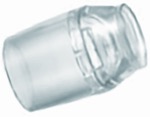
Training remains key, he said. “There is a little bit of a learning curve if you were trained in the older duodenoscopes.”
For its part, the FDA continues to support the use of disposable endcaps despite the incidents. Recent studies have shown the disposable devices, indeed, have been found to reduce scope contamination rates.
In a 2023 randomized clinical trial, Dr. Forbes and his co-investigators tested contamination in reprocessed duodenoscopes used in 518 patients who underwent ERCP. After high-level disinfection, the rate of contamination in disposable elevator cap duodenoscopes was 3.8% compared with 11.2% of standard duodenoscopes (JAMA Intern Med 2023;183[3]:191-200). Some centers perform sterilization with ethylene oxide to reduce the risk for duodenoscope infection, but that has its own issues.
Infrequent Harm
A study of four years of MAUDE reports found that although all three major brands reported patient injury from a dislodged endcap, the injuries were still very rare (Gastrointest Endosc 2022;96[1]:67-72).
The study included 185 reports that included 201 device issues and 118 patient adverse events reported to the FDA between June 2018 and June 2021. The reports included 125 issues that occurred in devices that had detachable disposable caps. Of these, just 25 were related to detachment.
“Overall, the use of duodenoscopes with detachable or disposable endcaps appears to be largely safe, with clinically significant patient adverse events being rare relative to their overall use,” Dr. Forbes said.
Dr. Jovani agreed, adding that even if an endcap detaches, the risk that a patient will suffer injury is slim. “It’s very soft. It doesn’t have an acute angle, so the probability that it will cause damage to the intestines is very low,” Dr. Jovani said.
Dr. Bilal said he believes the field—both endoscopists and manufacturers—has made significant strides in patient safety in the last few years.
The “recalls for the endcaps is a good message that in medicine you can never be more cautious. The newer iterations seem to have less issues but will need more data and time before a final verdict can be made,” Dr. Bilal said.
“We identified that duodenoscope-related infections were an issue and made changes to address that,” he said. “While further iterations of these devices and things like safety, cost and environmental impact still need to be evaluated, we are moving in the right direction.”
—Kaitlin Sullivan
Dr. Bilal reported financial relationships with Boston Scientific and Cook. Drs. Forbes and Jovani reported no relevant financial disclosures.
This article is from the July 2024 print issue.