






VANCOUVER, B.C.—A trio of studies presented at the 2023 annual meeting of the American College of Gastroenterology add support for the role of single-use duodenoscopes in endoscopic retrograde cholangiopancreatography.
High Overall Success Rates in Meta-Analysis
A systematic literature review revealed that single-use duodenoscopes are associated with a high success rate and promising safety profile in performing endoscopic retrograde cholangiopancreatography procedures (abstract P3717).
Data from the 634 patients included in the meta-analysis showed an adjusted pooled procedural completion rate of 94%, which was statistically significant and higher than the American Society for Gastrointestinal Endoscopy threshold of 90% (P<0.001). Of note, there were no recorded cases of aspiration or perforation.
“Based on this analysis, we concluded that single-use duodenoscopes had high overall success rates for completion of procedure with seemingly acceptable rates of adverse events and crossover,” said lead researcher Sujani Yadlapati, MD, a visiting clinical lecturer in medicine at Indiana University School of Medicine, in Indianapolis.
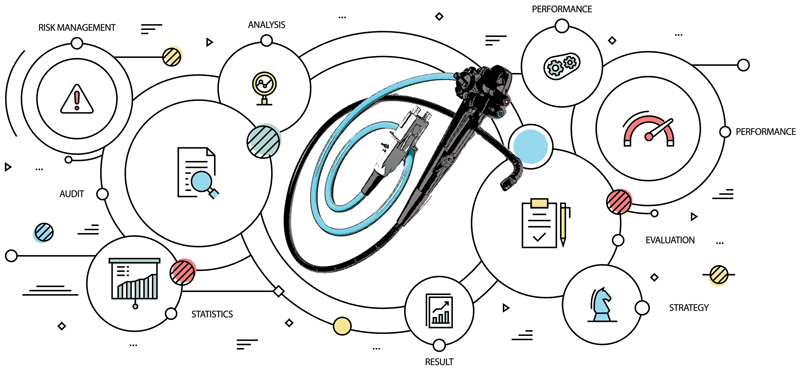
In the systematic literature review, the researchers included all studies published by the end of October 2022 that were in English and involved patients 18 years and older.
After screening 132 articles, Dr. Yadlapati and her co-investigators chose six studies for their final analysis. The primary outcomes measured were procedure completion rate, crossover rate (switching from a single-use to a reusable duodenoscope during the procedure due to technical difficulty), adverse event rate and safety.
Results of the analysis showed a full procedure completion rate of 95.5%, with an adjusted completion rate of 94%. In addition, adverse events recorded in the study were low and included post-ERCP pancreatitis (2.7%) and post-sphincterotomy hemorrhage (1.1%). These rates were well within the reported ranges for average-risk patients, Dr. Yadlapati told GEN Priority Report.
However, Dr. Yadlapati acknowledged that the study is limited by the nature of available studies, with only one having a comparative control. Any differences in sample patient population characteristics may have led to differences in outcomes and cannot be accounted for, she added, and other long-term outcomes, such as infection, were not available to be analyzed.
Dr. Yadlapati and her co-investigators underscored the need for more studies to confirm these findings and suggested that comparative groups with variables such as similar case complexity, native papilla and other factors should be considered in future studies.
Single-Center Study Showed High Efficacy

A single-center study has demonstrated similar efficacy and safety with a single-use duodenoscope compared with a reusable duodenoscope (abstract P3708).
The retrospective cohort study of patients undergoing ERCP using either the EXALT Model D single-use duodenoscope or Olympus TJF-Q180V reusable duodenoscope showed similarly high completion rates of 88% and 93.7%, respectively (P=0.30). Complication rates also were similar between study arms.
“We conclude that the EXALT Model D single-use duodenoscope has a similar clinical performance and safety profile compared to conventional reusable duodenoscope,” said lead investigator Iyiad Alabdul Razzak, MD, a resident physician at St. Elizabeth’s Medical Center and Boston University School of Medicine.
For this study, Dr. Razzak and his co-investigators included all ERCP cases attempted with single-use duodenoscopes since their adoption at a tertiary care center (January 2020 to February 2023). For comparison, the researchers randomly selected 80 ERCP cases performed with reusable duodenoscopes.
The primary outcome was clinical success rate. Secondary outcomes included reported technical difficulty, the rate of crossover from single-use to reusable duodenoscopes, complications and 30-day readmission rate.
Results of the study showed no significant differences in clinical success rates between patients with the single-use duodenoscope and the conventional reusable model.
In instances where the ERCP procedure could not be accomplished with the single-use model, a crossover was made to the conventional reusable duodenoscope, with a success rate of two out of three cases.
Reported complications were post-ERCP pancreatitis, bleeding and perforation, said Dr. Razzak, who noted that 85% of complications with the single-use duodenoscope occurred during the first six months of its adoption.
“The introduction and adoption of single-use duodenoscopes could reduce the infection risks associated with reusable scopes,” Dr. Razzak said. “However, our findings also indicate a learning curve for single-use duodenoscopes, even in the hands of experienced advanced endoscopists.
He said that “better characterization of this learning curve is needed to ensure safe adoption of these innovative devices.”
Third Study Showed Scopes’ Economic Viability
Finally, a study conducted on the economic implications of single-use duodenoscopes has shown that these devices are not only practical but may generate a modest profit within a community healthcare setting (abstract P0843).
Among 68 outpatient procedures evaluated, researchers found that 55 cases were reimbursed over a 16-month period.

“Our analysis showed that reimbursement ... at least reached a break-even point and actually allowed for a very mild profit for the institution when using the single-use duodenoscope,” said lead investigator Robert S. Dean, MD, a gastroenterologist at Premier Medical Group in Poughkeepsie, N.Y.
For this study, Dr. Dean and his co-investigators examined the financial viability of single-use duodenoscopes for ERCPs between Jan. 1, 2022, and April 20, 2023. Their primary objective was to evaluate whether insurance reimbursements, including cases that were un-reimbursed, would allow for use of these devices without financial loss.
During the 16-month study period, the researchers considered 68 outpatient procedures involving various insurance plans. A total of 55 cases were successfully reimbursed, offsetting the initial expense of using the single-use devices. The average reimbursement was $3,223 per case. Even with 13 unreimbursed cases, the study demonstrated that the cost of using single-use duodenoscopes was not just economically feasible but could result in a minor economic gain for healthcare institutions.
Of note, the research did not account for potential savings from additional factors typically associated with the maintenance and use of reusable duodenoscopes, Dr. Dean said. These factors include costs associated with purchasing and maintaining equipment, managing potential infectious complications, reprocessing expenses, and addressing equipment malfunction and repair, among others.
According to Dr. Dean, prior estimates of an economic “break-even” point for single-use duodenoscopes fall in the range of 150 to 250 ERCPs per year, assuming a 0.4% infection rate. However, these estimates assume no device reimbursement (Tech Innov Gastrointest Endosc 2022;24[1]:16-24).
“If device reimbursement were to be included, single-use duodenoscopes may prove to not only be a viable option in lower-use or medium-use settings, but also more efficient, higher-volume institutions as well,” Dr. Dean concluded.
Assessing the Need to Switch
However, even if single-use scopes are viable, they may not be necessary in all cases, according to Harish K. Gagneja, MD, FACG, AGAF, FASGE, the chief medical officer of Austin Gastroenterology, in Texas.
Dr. Gagneja told GEN Priority Report that the main reason for switching (infection control) has been significantly overstated. “We have started on a journey that is inherently flawed, ” Dr. Gagneja said. “The assumed infection rate is closer to 0.04%, not 0.4%. Infection control is out of control and outstrips actual, data-backed risks.”
In addition to the detrimental environmental impact, Dr. Gagneja underscored the high costs associated with switching from reusable to disposable duodenoscopes, including environmental costs. “Just because the device is reimbursed by insurance doesn’t mean that it is economically feasible,” he said. “Medicare is paying for it, which means that you and I are paying for it, too.”
According to Dr. Gagneja, there are two settings where single-use duodenoscopes potentially make sense: very low-volume centers, where knowledge about optimal reprocessing techniques may be lacking and high-volume centers for cases involving severely immunocompromised patients.
—Chase Doyle
Dr. Dean reported a financial relationship with Boston Scientific. Drs. Gagneja, Razzak and Yadlapati reported no relevant financial disclosures. Dr. Gagneja is a member of the Gastroenterology & Endoscopy News editorial board.



This article is from the December 2023 Priority Report print issue.