





GEN Priority Report recently sat down with Garland-Rhea Grisby, CER, CFER, CSPDT, the endoscope service manager for Kaiser Permanente in East Bay, Calif., to discuss sterilization and high-level disinfection of endoscopes. Mr. Grisby, who has been with Kaiser for more than 20 years, also is the interim assistant director for sterile processing for Kaiser in Oakland, Calif. Below, he shares his perspectives on scope reprocessing, double disinfection and training staff to optimize patient safety.
GEN Priority Report: What is your hospital like? You’re part of a bigger system, but how does that all flow together?
Mr. Grisby: We have a regional practice and regional policies that we follow. And I have the privilege of sitting on committees where we create the policies, and I’m the co-chair of the Northern California endoscopy group for Kaiser. That’s how we make sure that we’re as close to being on the same page as possible. Not all facilities are created equally, and we have to understand that. If you have seen one hospital, you’ve seen one hospital. I manage three facilities, and they’re all different. It’s having a consistent practice that can work even when it’s different.
GEN Priority Report: How many people are on your staff?
Mr. Grisby: For my scope staff, I have 18 across the three facilities, and they just do flexible scopes, ultrasound probes, and high-level disinfection and some sterilization of flexible scopes. It is just me who manages them, and I have some strong lead techs. For the sterile processing department, there’s about a good 45 to 50 techs and three supervisors.
GEN Priority Report: Can you walk us through scope reprocessing at your facilities?
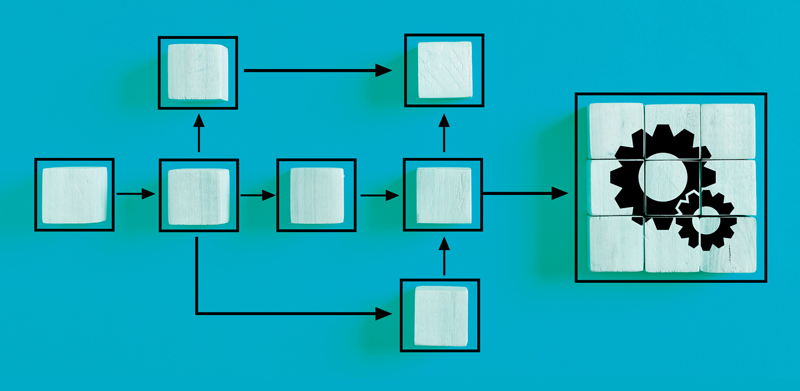
Mr. Grisby: That’s the question most folks ask. What is the process? What is the workflow? Initially, when a patient procedure is completed, a point-of-use treatment takes place immediately after the scope is withdrawn. You definitely want to make sure the case is finished because you don’t want to do point-of-use treatment and then try to introduce the scope back into the patient.
Then, you follow what’s in the manufacturer’s instructions for use, and also what’s in your policy, regarding point-of-use treatment for instruments and scopes. From there, you take that scope into the soil room or processing area, and that’s when the visual inspection, the leak testing, the manual cleaning, the rinsing, the purging, the brushing, all of that takes place. Then, it goes over to the sterilizer or automated endoscope reprocessor.
Once those cycles are finished, if it’s sterile, you take it and store it appropriately. If it’s high-level disinfected, then you take it and store it in the scope cabinet until it is ready for the next patient to use.
There are tons of different storage hang-time durations—I’ve heard everything from 12 hours to 60 days, as far as hang time. The risk assessment for high-level disinfected scopes is something each facility needs to perform because everybody’s risk is different. Where’s your scope cabinet stored? Who has access? Have they been trained? All of that plays a part in how long your scope should be stored before you reprocess or use.
A factor that plays an important role is volume. You want to consider how many rooms are going to be doing procedures. It’s also important to consider the volume on worst-case days because you want to make certain that you have sufficient inventory and staff to handle the volume of cases.
Here’s an example. Specialty cases are done in one of my facilities, but there is a need to increase the current inventory to accommodate the volume and needs. This will avoid constantly overusing scopes, which could cause damage at a faster rate. Another key factor is making sure the inventory you have is being utilized and not being stored unused. Having sufficient inventory allows for proper processing time, allowing staff to avoid cutting corners and avoid patient delays. We never want to be in a situation where we have to cancel a patient or a patient has to wait.
GEN Priority Report: Which flexible scopes do you sterilize, and which do you high-level disinfect?
Related Content


Mr. Grisby: At this point, we use low-temperature sterilization for our cystoscopes and ureteroscopes. Those are scopes that are considered high risk. Although guidelines are now saying that flexible scopes should be sterilized, that is easier said than done. Yes, we want the best for our patients, but a move to 100% sterilization of all scopes requires planning, not just on the part of the facility, but will require the scope manufacturers to provide sterilization parameters as well. That will require more equipment—sterilizers, containers, storage space, etc.
GEN Priority Report: How do you handle high-level disinfection?
Mr. Grisby: The whole double-disinfection process came about years ago when there was a breach with duodenoscopes. Initially, we all looked to the FDA, and the end result was double disinfection of certain scope models, in addition to soil marker tests to make sure that the scopes are actually clean before you high-level disinfect them twice. But double disinfection has since been retracted, and rightly so, because at the end of the day, when you look at high-level disinfection, it’s supposed to do what it’s supposed to do the first time. It’s been said that double disinfection is like taking two showers back-to-back. Some facilities still adhere to double disinfecting, and they’re comfortable with it. But it has been noted that double disinfecting also can break down your scope faster because now you’re running two cycles of chemical when it technically could have used the one.
GEN Priority Report: How do you dry your scopes?
Mr. Grisby: We have the scope cabinets that have the tubing and connectors that allow for air to purge, and you can adjust the time that it purges. You can have it on for 30 minutes, and it’ll go off for 30 minutes or an hour. You can have it come back on, so it’s a continuous flow however you lay it out. Not everybody has those. Some facilities have the older ones, where you just hang and let gravity do its thing. Those are the ones where they’re finding that there’s still moisture inside scopes days later. Facilities have been trying to upgrade, slowly but surely, but cost and real estate factor into decisions to upgrade.
GEN Priority Report: How do you train the new employees about your processes and make sure all staff members are following protocols?
Mr. Grisby: I learned years ago that if I want the training done consistently, I need to do the training. That’s been my practice. I perform the training for all new staff who come in and are going to process scopes from start to finish, so the information they’re receiving is consistent. I sit with the employee, and we go over every page of the policy and procedure [manual], and I tell them, this is not the competency. This is just so you see what’s in our policies and what we should do. If a surveyor, quality control or infection preventionist comes into our area, they want to make sure that we’re doing what’s in our policies.
Some facilities train differently, but I start with the basics and go into the more difficult scopes to process as time goes on and the employee becomes confident and competent. By time we get to the more difficult scopes (e.g., duodenoscopes), they already have the concept in their head of how it should be done. Yes, it’s time-consuming, but it allows me to sleep at night knowing that our patients are receiving the best care as far as our scopes are concerned.
This interview has been edited for brevity and clarity.
This article is from the December 2024 Priority Report print issue.