





Storing endoscopes fully vertically suspended significantly reduced residual moisture and bacterial growth compared with partial suspension or looped storage, according to a recent evaluation of three cabinet designs and three storage methods.
Drying and storage are important final steps of reprocessing flexible endoscopes, but data comparing storage methods of endoscopes after reprocessing are limited, according to the investigators, led by Daisuke Ohki, MD, PhD, of the University of Tokyo Hospital.
Outbreaks involving gastroscopes, colonoscopes, and duodenoscopes highlight the need for better infection prevention practices to prevent microbial transmission through endoscopes, the investigators noted.
In a pilot study published in the American Journal of Infection Control (2025;53[12]:1252-1258), Dr. Ohki and his co-investigators compared residual moisture and bacterial cultures among three styles of Taiho storage cabinets: TJ-908S and TJ-804S, which used active drying, and TM-804S, which used passive drying. The storage method for the TJ-908S was full vertical suspension, whereas the TM-804S and TJ-804S involved partial suspension and looped storage.
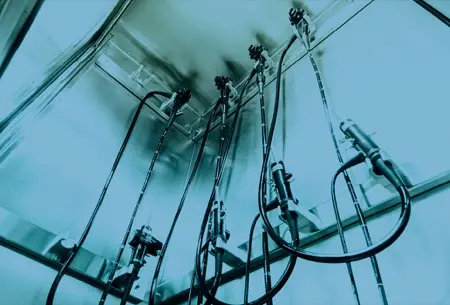
The researchers measured residual moisture and performed bacterial cultures and found that the TJ-908S cabinet with full vertical suspension showed an average residual moisture of 23.9 and 17.6 mcL at 24 and 48 hours, respectively. The other two cabinets with partial suspension or looped storage retained residual moisture ranging from 289.4 to 383 mcL at 24 hours and 278.5 to 518.7 mcL at 48 hours.
The researchers also inoculated all endoscopes with Pseudomonas aeruginosa (105 colony-forming unit [CFU]/mL). Based on bacterial cultures after 24 hours, growth in the TJ-908S cabinet with vertical suspension was minimal. One of six endoscopes showed 1 CFU, another showed 5 CFUs, and the four remaining endoscopes showed no detectable bacterial colonies.
The median CFU counts in the TM-804S and TJ-804S were 10 and 12, respectively, but samples from these cabinets varied, with some exceeding 100 CFUs.
In addition, longer time was associated with further drying and decreased CFU counts in the TJ-908S but not in the other two cabinets, which may reflect the long, narrow channels in these models, the researchers said.
The pilot study was limited by the small sample size, the culture of a single strain of bacteria, and the exclusion of alcohol flushing from the protocol, the investigators wrote, and larger studies are needed to confirm the findings.
However, “our results indicate that not only storage time and cabinet features, but also structural design and endoscope positioning reproducibility significantly affect drying efficiency and bacterial contamination risk,” they noted. The findings show the value of a cabinet allowing for full vertical suspension in reducing moisture and preventing bacterial growth and may inform future research and practical improvements in endoscope reprocessing and infection control, they concluded.
Moisture Matters
A low number of bacteria, while important, does not necessarily imply that the endoscopes are adequately dry, Mohamed Yassin, MD, PhD, a professor of medicine at the University of Pittsburgh, told GEN Priority Report.
The longer cabinets that allow for full suspension may be better, “but certainly [are] not enough,” added Dr. Yassin, who was not involved in the current research but led a 2023 study on moisture retention in endoscopes after reprocessing (Am J Infect Control 2023;51[5]:527-532).
Dr. Yassin noted that unpublished research by a different study team has examined cabinets that are similar to those in the current study using a stripped endoscope model. This model allowed the researchers to visualize the moisture. In terms of dryness, Dr. Yassin said he finds visualization more accurate, and he emphasized the need for additional research involving these models.
—Heidi Splete
Dr. Ohki received the TM-804S and TJ-804S cabinets from Taiho under a no-cost loan agreement. Dr. Yassin reported no relevant financial disclosures.
This article is from the December 2025 Priority Report print issue.