
Patients with irritable bowel syndrome are three times more likely to have non-alcoholic fatty liver disease than people without IBS, according to an analysis of national data.
The study is not the first to propose an association between the two conditions, but it used a database with over 84 million patients, of whom more than 600,000 had IBS. The study was not designed to explain the reason for this association, but it does indicate that some link, such as change in gut microbiota, might be involved, according to Muhammad Talal Sarmini, MD, who presented the results at the 2019 annual meeting of the American College of Gastroenterology (abstract P0347).
This association was drawn from the National Inpatient Sample database. Data were analyzed for the years 2003 to 2014. The 637,942 patients (0.75%) with IBS according to diagnostic coding were compared with the nearly 84 million without the condition.
People with IBS were 3.2 times more likely to have NAFLD than those without the bowel disorder. The 95% CI was relatively narrow, showing a highly significant association, according to the researchers (95% CI, 3.1-3.3; P<0.001).
Compared with people without IBS, the IBS group was significantly more likely to be obese (11% vs. 8.2%; P<0.001) and to have hypertension (47.6% vs. 43.6%), hyperlipidemia (20.6% vs. 16%), and/or hypothyroidism (16.5% vs. 9.2%) (P<0.001 for all comparisons).
In addition, patients with IBS were significantly more likely than those without it to be older (58 vs. 57 years) and female (82.7% vs. 60.1%), while less likely to be black (8.9% vs. 14.8%) (P<0.001 for all comparisons).
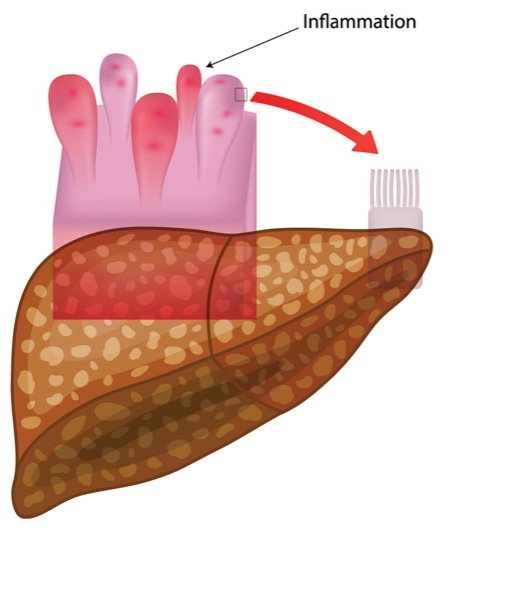
The authors of a 2013 article exploring a potential relationship between IBS and NAFLD (World J Gastroenterol 2013;19[33]:5402-5420) hypothesized that some shared pathogenic mechanisms include gut dysbiosis, impaired motility and impaired function of the gut barrier. They observed that both conditions involve some degree of upregulated inflammation at the local and systemic levels. However, they did not reach a conclusion on whether the disease processes proceed independently or are interrelated.
The new retrospective analysis strengthens the association, according to Dr. Sarmini, who said clinicians should have a high index of suspicion for concomitant NAFLD in their patients with IBS.
“The results of this retrospective study are not surprising,” said Nikolaos T. Pyrsopoulos, MD, PhD, the chief of the Division of Gastroenterology and Hepatology at Rutgers New Jersey Medical School, in Newark. Dr. Pyrsopoulos, who has published on the relationship between the gut microbiome and liver disease, said this area of research is attracting increasing interest.
“There [are] a number of publications linking fatty liver with alterations of the gut microbiome,” Dr. Pyrsopoulos said. With similar findings for IBS, it is reasonable to consider that gut dysbiosis might associate these otherwise distinct pathologies. “Ideally, a prospective study will enlighten the association,” he said.
—Ted Bosworth
Dr. Pyrsopoulos reported financial relationships with AbbVie, Bayer, BeiGene, Bristol-Myers Squibb, Conatus, Exelixis, Gilead, Mallinckrodt, Novartis, Prometheus, Valeant and Vital Therapies. Dr. Sarmini reported no relevant financial conflicts of interest.